Plant and Animal Health
Plant and animal health forms the cornerstone of profitable and sustainable agricultural operations. Whether you’re managing crops, livestock, or both, the ability to identify threats early, prevent problems before they escalate, and intervene with precision can mean the difference between thriving yields and devastating losses. Yet many farmers still rely on reactive approaches—waiting for visible symptoms before taking action, following calendar-based protocols that ignore biology, or applying broad-spectrum treatments that create more problems than they solve.
This comprehensive resource introduces the fundamental principles and practical strategies that underpin effective plant and animal health management. From understanding what’s happening beneath the soil surface to leveraging biological allies, implementing strict biosecurity measures, and using modern detection technologies, we’ll explore how integrated approaches deliver better outcomes than any single intervention alone. These practices aren’t just about preventing disease or controlling pests—they’re about creating resilient agricultural systems that perform consistently season after season.
Soil Health and Compaction Management
The foundation of plant health literally starts beneath your feet. Soil compaction represents one of the most overlooked yet damaging conditions affecting crop productivity, often reducing yields by 20-60% before any visible symptoms appear above ground. When soil particles are pressed together, the pore spaces that roots, water, and air need to function properly collapse, creating a hostile environment that limits crop potential for years.
Diagnosing Hidden Compaction Issues
Visual surface inspection catches only the most severe compaction problems. The real damage typically occurs in the subsoil layers—between 8 and 18 inches deep—where roots should be accessing moisture and nutrients during critical growth stages. A penetrometer provides objective measurements of soil resistance, allowing you to map compaction patterns across fields and identify problem zones before planting. Look for readings above 300 psi, which indicate restricted root growth, and pay particular attention to transition zones where tillage depth ends and undisturbed soil begins.
Prevention and Remediation Strategies
Addressing compaction requires both immediate remediation and long-term prevention. Mechanical solutions like deep ripping can shatter hardpans, but they’re expensive, energy-intensive, and only temporary if the root causes aren’t addressed. Biological remediation through cover crops with deep taproots (like daikon radish or tillage radish) offers a gentler approach, creating channels that improve water infiltration and root penetration while adding organic matter.
Prevention starts with tire pressure management. Modern equipment can exert ground pressures exceeding 40 psi, which compacts soil even when conditions seem ideal. Reducing tire pressure to match load requirements, using tracks instead of tires, and limiting field operations when soil moisture exceeds field capacity can prevent compaction from developing in the first place. The yield lost to untreated shallow rooting compounds year after year, making prevention far more cost-effective than remediation.
Integrated Pest Management and Timing
Successful pest management isn’t about eliminating every insect—it’s about understanding pest biology well enough to intervene at the moments when populations are most vulnerable and damage potential is highest. Calendar-based spraying wastes money and accelerates resistance development because it ignores the biological reality of pest populations cycling through different life stages at varying rates depending on temperature, humidity, and host plant availability.
Understanding Life Cycle Vulnerabilities
Every pest species has a life cycle with distinct stages—eggs, larvae, pupae, and adults—each with different vulnerabilities and damage potential. Early larval stages typically cause minimal damage but are easiest to control with lower pesticide rates. Targeting these narrow intervention windows requires understanding degree-day accumulation and developmental thresholds. For example, corn borers are most susceptible during the brief period between egg hatch and tunnel entry, which might last only 3-5 days depending on temperature.
Scouting and Economic Thresholds
Effective scouting identifies pest presence, population density, and developmental stage before economic damage occurs. Rather than spraying on a schedule, base decisions on field-specific conditions:
- Scout fields at regular intervals using systematic patterns to ensure representative sampling
- Identify larval stages accurately—first instars require different responses than fourth instars
- Compare populations against established economic thresholds for your crop and market value
- Consider beneficial insect populations before applying broad-spectrum materials
- Optimize spray timing based on pest activity patterns—many species feed most actively during specific temperature ranges or times of day
This intelligence-driven approach reduces pesticide use while improving control efficacy, and dramatically slows the development of resistance by maintaining susceptible genes in the population and reducing selection pressure.
Disease Prevention and Fungicide Strategies
Plant diseases typically gain their foothold during narrow environmental windows when temperature, humidity, and host susceptibility align. Humidity duration—the number of consecutive hours that leaf surfaces remain wet—is often more critical than rainfall amount for driving infection rates. Many fungal pathogens require 6-12 hours of continuous leaf wetness to complete the infection process, which is why dew formation overnight can be more dangerous than brief afternoon showers.
Preventative fungicide strategies apply protection before infection occurs, creating a chemical barrier on plant surfaces that pathogens cannot penetrate. This approach works best for diseases with predictable infection windows and high damage potential. Curative fungicides, which can halt infections already underway, offer more flexibility but typically cost more and work within narrower time windows—usually 24-72 hours post-infection.
The risk of fungicide resistance development increases dramatically when growers rely repeatedly on products with the same mode of action—the specific biochemical process the fungicide disrupts. Pathogens can develop resistance through genetic mutations that are then selected for with each application. Rotating modes of action, tank-mixing products with different mechanisms, and integrating cultural practices like optimizing canopy airflow through planting density and row orientation helps preserve fungicide efficacy while reducing disease pressure.
Early detection through systematic scouting allows intervention before diseases establish epidemic conditions. Look for initial infection sites on lower leaves, monitor weather conditions that favor disease development, and use predictive models when available to anticipate high-risk periods.
Biological Control and Natural Allies
Agricultural fields aren’t biological deserts—they’re complex ecosystems where beneficial organisms can provide substantial pest suppression if given the opportunity. The problem with broad-spectrum insecticides is that they kill indiscriminately, eliminating predatory mites, parasitic wasps, lady beetles, lacewings, and other beneficial species that naturally regulate pest populations. When you wipe out these allies, pest resurgence often follows as surviving pests reproduce without natural enemies to keep them in check.
Biological control leverages these natural relationships through several approaches. Conservation biological control protects and enhances existing beneficial populations by providing habitat, alternative prey, and nectar sources while minimizing pesticide impacts. Augmentative release involves introducing commercial beneficials like predatory mites for spider mite control or parasitic wasps for whitefly and aphid management.
Biopesticides derived from natural organisms (like Bacillus thuringiensis for caterpillar control or entomopathogenic nematodes for soil-dwelling larvae) offer pest-specific control with minimal impact on non-target organisms. While chemical pesticides may deliver faster knockdown, biological options often provide more sustainable long-term suppression and don’t trigger resistance issues or residue concerns.
Storage and handling are critical for biological products—many lose efficacy rapidly if exposed to heat, light, or temperature extremes. Maintaining beneficials requires creating habitat complexity through insectary strips, hedgerows, or flowering borders that support beneficial populations throughout the season, not just during peak pest pressure.
Biosecurity Protocols for Disease Prevention
Preventing disease introduction is far easier than eradicating pathogens once they’re established. Biosecurity refers to the systematic protocols that prevent disease-causing organisms from entering your operation and spreading between production areas. This becomes especially critical for contagious diseases that can devastate livestock herds or destroy entire crop plantings.
Visual inspection alone proves insufficient for identifying disease carriers—many pathogens have asymptomatic carriers or incubation periods where animals or plants are infectious before showing symptoms. Effective biosecurity requires multiple overlapping strategies:
- Quarantine protocols that isolate new animals or plant materials for observation periods before introducing them to existing populations
- Testing programs that screen for specific pathogens rather than relying on prophylactic treatment, which can mask infections while allowing spread
- Equipment sanitation between farms or fields, since machinery and tools can mechanically spread pathogens on soil, plant debris, or contaminated surfaces
- Visitor management including vehicle restrictions, dedicated clothing and footwear, and contact tracing through visitor logs that document who entered which areas when
- Zoning systems that create physical separation between high-risk entry points and core production areas
Shared equipment between farms represents particularly high risk, as contaminated machinery can introduce soilborne pathogens, weed seeds, or crop residues harboring diseases. The cost of thorough equipment cleaning and disinfection is trivial compared to the potential damage from introducing a new pathogen into previously clean fields.
Early Stress Detection Technologies
By the time plant stress becomes visible to the human eye through yellowing, wilting, or stunted growth, yield loss is often already significant. Modern detection technologies identify physiological stress days or weeks before visual symptoms appear, creating opportunities for intervention while problems are still manageable.
Canopy temperature provides a powerful early indicator because stressed plants close their stomata to conserve water, which reduces evaporative cooling and causes leaf temperatures to rise above ambient levels. Thermal imagery from drones or ground-based sensors can map these temperature differences across entire fields, identifying stress patterns that might indicate irrigation issues, disease development, or nutrient deficiencies.
Handheld fluorometers measure chlorophyll fluorescence—the light re-emitted by chlorophyll molecules during photosynthesis. When plants experience stress, photosynthetic efficiency declines before any visible symptoms develop, and fluorescence measurements detect these changes in real-time. This technology helps distinguish between different stress types: nutrient deficiencies, water stress, and disease infections each produce characteristic fluorescence signatures.
The challenge is avoiding misdiagnosis—nutrient stress, drought stress, and early disease symptoms can produce similar visual cues. Combining multiple detection methods (visual scouting, thermal imaging, fluorescence testing, and soil analysis) provides the most reliable diagnosis. Sensor placement matters enormously in heterogeneous fields where soil types, drainage patterns, or elevation changes create variable growing conditions. Representative monitoring locations should capture this variability rather than averaging it away.
Precision Application Technology
Applying pesticides or other crop protectants effectively requires delivering the right droplet size to the target surface while minimizing drift that wastes product and creates off-target risks. Droplet size fundamentally affects both coverage and drift potential: fine droplets provide excellent coverage on complex surfaces but drift easily in even slight air movement, while coarse droplets resist drift but may bounce off leaves or provide inadequate coverage.
Air-induction nozzles produce larger, air-filled droplets that resist drift better than conventional flat-fan nozzles while still providing acceptable coverage for many applications. Boom height affects the spray pattern overlap and droplet flight time—lower booms reduce drift but require more precise height control, while high booms increase drift risk exponentially.
Environmental conditions during application matter as much as equipment settings. Temperature inversions—where a layer of warm air traps cooler air near the ground—occur frequently during calm evening conditions and can suspend fine droplets in the air for hours, allowing them to drift miles from the application site. Wind speed, temperature, and humidity all influence droplet evaporation and drift potential.
Tank cleanout procedures prevent crop injury from residues and cross-contamination between products. Some herbicides active at parts-per-billion concentrations can injure sensitive crops if tank residues aren’t properly removed, making thorough cleaning protocols essential for protecting both applicators and subsequent crops.
Integrating plant and animal health strategies creates agricultural systems that are more productive, more sustainable, and more resilient to environmental challenges. Success comes from understanding the biological principles underlying each practice, monitoring conditions systematically, and intervening precisely when the effort invested delivers the greatest return. These foundational concepts provide the framework for making informed decisions tailored to your specific crops, livestock, and operational conditions.
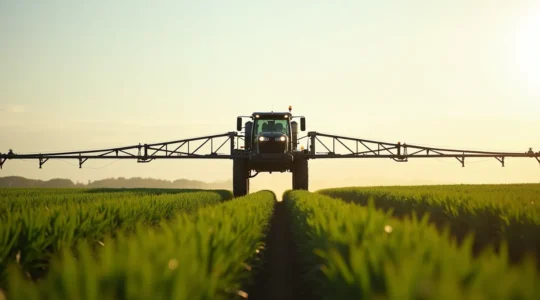
How to Execute Phytosanitary Interventions Without Drift Liability?
Simply ‘following best practices’ for spray application is no longer enough to protect you from drift liability claims. Effective risk management hinges on creating quantifiable, documented evidence of due diligence for every single application. Understanding atmospheric physics, especially temperature inversions,…
Read more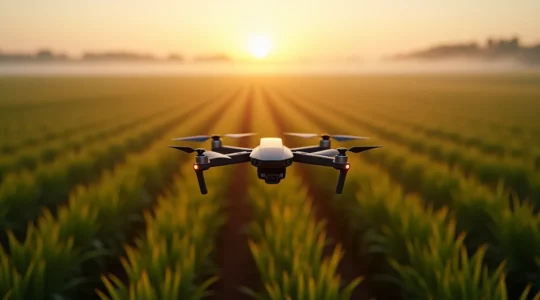
How to Detect Water Stress 3 Days Before Symptoms Appear?
In summary: Visible signs of water stress like wilting mean yield loss has already begun; the goal is pre-symptomatic detection. Plants communicate stress through invisible signals, primarily a rise in canopy temperature and changes in chlorophyll fluorescence. Thermal imaging can…
Read more
How to Quarantine New Stock to Prevent Epizootic Outbreaks?
Quarantine is not a 30-day waiting period; it is an active investigation that operates on the assumption that every new animal is guilty of carrying disease until proven innocent. Healthy-looking animals can be “Trojan Horses,” silently shedding viruses like BVD…
Read more
Strategic Biocontrol: A Grower’s Guide to Using Beneficial Insects for Effective Pest Management
True mastery of pest control lies not in replacing a chemical with a bug, but in architecting a resilient farm ecosystem where beneficial insects thrive and prevent outbreaks before they start. Pyrethroid insecticides often trigger a “pest resurgence cascade,” leading…
Read more
Sclerotinia Alert: How to Prevent White Mold Outbreaks in Dense Canopies
The fight against Sclerotinia is won or lost in the microclimate of your canopy, not with last-minute sprays. Prolonged leaf wetness, not total rainfall, is the primary trigger for infection. Early detection relies on spotting tiny, mushroom-like apothecia on the…
Read more
How to Predict Pest Outbreaks Using Degree Days?
In summary: Stop calendar-based spraying; this method often misses the pest’s brief vulnerability window, leading to wasted applications. Utilize Degree Days (DD) to accurately track insect development, which is driven by ambient temperature, not the calendar date. Synchronize all interventions,…
Read more
A Root Cause Analysis: How to Diagnose and Break Hardpans Limiting Penetration
In summary: Stunted crops in an otherwise green field are a classic sign of a hidden hardpan restricting root growth. A penetrometer is the primary tool for diagnosing compaction, but visual inspection in a soil pit provides crucial corroborating evidence….
Read more