Machinery and Equipment
Modern agriculture operates at the intersection of mechanical engineering, agronomy, and data science. The machinery that powers today’s farms represents far more than steel and horsepower—it embodies decades of iterative design aimed at balancing productivity, soil health, and economic viability. Whether you’re managing a hundred acres or several thousand, understanding how different equipment systems function and interact determines your operational success more than almost any other factor.
This article provides a comprehensive foundation for understanding the major categories of farm machinery and equipment. From the soil-engaging implements that prepare seedbeds to the autonomous systems reshaping labor dynamics, we’ll explore how each technology works, why certain decisions matter more than others, and what practical considerations should guide your equipment choices and operational settings.
Tillage Systems: Choosing the Right Approach for Your Soil
Tillage represents one of the most fundamental decisions in crop production, yet it’s also one of the most misunderstood. The spectrum ranges from conventional full-width tillage to strict no-till systems, with numerous hybrid approaches in between. Each method creates different soil conditions, affects residue differently, and demands specific equipment capabilities.
Understanding Different Tillage Methods
Conventional tillage turns the soil completely, burying residue and creating a uniform seedbed. Think of it as hitting the reset button on your field’s surface structure. Minimum tillage disturbs only part of the soil profile—typically 30-50% of the surface—leaving some residue anchored for erosion protection. No-till eliminates tillage entirely, relying on specialized planters to cut through residue and place seed directly into undisturbed soil.
Between these categories sit specialized approaches like strip-till, which tills only narrow bands where rows will be planted, and vertical tillage, which sizes residue without inverting soil layers. Disc ripping, by contrast, fractures compacted layers at depth while leaving surface residue largely intact. The key distinction lies not just in how much soil you move, but where and when you move it.
Soil-Specific Considerations and Timing
Heavy clay soils illustrate why soil type dictates tillage success. Clay particles bind tightly when aggregated, creating structured soil with good pore spaces. A sudden shift to no-till can trigger problems because these soils rely on periodic disturbance to prevent extreme surface sealing. Without the earthworm populations and organic matter that develop over years in established no-till systems, heavy clays may shed water rather than absorb it.
Timing matters as much as method. Operating tillage equipment when soil moisture exceeds field capacity—essentially working wet ground—causes compaction damage that can persist for years. Compacted layers restrict root growth and water infiltration, creating yield limitations that no amount of fertility can overcome. Waiting for proper soil conditions requires patience but preserves the soil structure you’re trying to improve.
Equipment weight compounds these risks. Modern tractors and implements can exert ground pressure exceeding 30 pounds per square inch, enough to create compaction zones below the tillage depth. Track systems distribute weight more effectively than tires, but both require conscious management of field conditions and traffic patterns.
The Rise of Autonomous Farm Equipment
Autonomous tractors and robotic field equipment have transitioned from research curiosities to commercially viable tools. This shift reflects both technological maturation and fundamental changes in agricultural labor markets. Understanding what drives automation adoption—and what challenges remain—helps frame realistic expectations for this technology.
Economic Drivers Behind Automation
Labor shortages hit agriculture harder than many industries because field work demands both skill and availability during narrow operational windows. When you need to plant 2,000 acres within a ten-day optimal window, having qualified operators available around the clock becomes a limiting factor. Autonomous systems extend operational hours without additional labor, essentially adding capacity when you need it most.
Return on investment calculations for driverless tractors differ fundamentally from conventional equipment purchases. You’re comparing the cost premium of autonomy (whether retrofitting existing machines or buying purpose-built units) against the combined savings of reduced labor costs, extended operating windows, and improved precision. Current data suggests operations exceeding 3,000 acres can justify the investment, though this threshold drops as technology costs decline and labor costs rise.
Technical Considerations for Implementation
Safety perimeters and geofencing define where autonomous equipment can operate and what triggers an automatic shutdown. These virtual boundaries function like invisible fences, preventing machines from entering roads, waterways, or occupied areas. Setting them correctly requires detailed field mapping and ongoing adjustments as conditions change—a stock pond that’s normally dry might fill after heavy rain, requiring temporary perimeter modifications.
Connectivity loss represents the primary technical risk. Autonomous systems rely on continuous communication with base stations or satellite networks for precision guidance and remote monitoring. When that connection drops, machines must either stop in place or continue following their last instructions until reconnection occurs. Neither option is ideal during time-sensitive operations, which is why robust contingency protocols and redundant communication pathways matter tremendously.
The choice between retrofit kits and purpose-built autonomous units parallels the decision between renovating an existing building versus constructing new. Retrofits preserve your equipment investment and work with familiar machines, but they’re limited by the base platform’s design. Purpose-built units integrate autonomy from the ground up, often achieving better performance and reliability, but require full replacement of existing equipment.
Harvest Efficiency: Optimizing Combine Performance
Combine harvesters represent the most complex mobile equipment on most farms, simultaneously cutting, threshing, separating, and cleaning grain while managing residue distribution. Getting all these systems working in harmony requires understanding how they interact and what settings matter most for your specific crop conditions.
Critical Settings for Minimizing Losses
Grain loss occurs at multiple points in the combine, but the cleaning shoe represents the most common bottleneck. Air from the cleaning fan lifts light chaff while heavier grain falls through sieves onto collection pans. The relationship between fan speed and sieve opening creates a delicate balance—too much air blows grain over the back with the chaff, while too little leaves the grain stream contaminated with debris.
When losses exceed acceptable levels, a systematic diagnostic procedure helps identify the source. The “kill stall” method involves shutting down the combine under load, then carefully examining where grain accumulates. Finding whole kernels on the ground behind the machine indicates different problems than discovering them in the tailings return or stuck in the rotor. This methodical approach prevents the common mistake of adjusting the wrong system and making problems worse.
Residue distribution affects next year’s crop establishment as much as current harvest efficiency. Chopper settings determine how finely straw is cut and how uniformly it spreads across the cut width. Wide headers (40 feet or more) challenge even well-configured choppers, especially in windy conditions that push residue to one side. Matching chopper knife configuration, rotor speed, and spread pattern to your header width and typical crop volume prevents residue management problems downstream.
Header Selection and Configuration
Draper heads use continuous belts to move cut crop toward the center feeder, while auger heads rely on rotating screws. Drapers excel at feeding capacity—they can handle higher ground speeds in heavy crops without bunching or slugging the feeder house. Think of a draper like a conveyor belt that maintains even flow, versus an auger that can create waves of material. In crops like soybeans or canola that cut easily but can overwhelm the feeder, drapers typically outperform augers.
Rotor belt slippage emerges as a concern when processing extremely heavy crops or operating on hillsides. The rotor belt drives the main threshing cylinder, and when it slips, you lose threshing capacity instantly. This risk increases in corn silage or particularly heavy small grain crops that load the rotor beyond its designed capacity. Monitoring rotor speed and addressing slippage immediately prevents cascading problems throughout the machine.
Advanced Threshing Technology: Axial Rotor Systems
Axial-flow combines fundamentally changed grain harvesting when they were introduced, and they now dominate in many crops and regions. Understanding why axial systems differ from conventional cylinder designs—and how to configure them properly—unlocks significant quality and efficiency advantages.
How Axial Flow Protects Grain Quality
Conventional cylinder threshing uses a rasp-bar cylinder rotating against a concave, with crop passing through once in a rapid, aggressive action. Axial flow, by contrast, feeds crop tangentially into a rotor where it spirals along the length of the rotor cage. This extended separation zone means grain experiences many smaller threshing and separating events rather than one intense impact. The result resembles the difference between cracking a walnut with a single hammer blow versus rolling it under gradually increasing pressure.
This gentler action particularly benefits crops where kernel damage affects value. Seed corn, malting barley, and soybeans for food-grade markets all command premiums for intact, undamaged kernels. Axial systems can achieve lower damage rates while still maintaining complete threshing, essentially improving both quality and quantity simultaneously.
Tailoring Rotor Configuration to Crop Conditions
Concave clearance—the gap between rotor and concave—represents the primary adjustment for different crop conditions. Wider clearances work for crops that thresh easily, allowing faster rotor speeds without over-threshing. Tighter clearances force more aggressive action for difficult-to-thresh crops or those with high moisture content. The principle mirrors adjusting the gap on a grain mill: tighter for more grinding action, wider for gentle processing.
Specialty rotors replace standard rotor designs for particularly challenging crops. Tough, fibrous crops like edible beans or crops with green weeds may benefit from extended rasp-bar rotors or other specialized configurations. Standard rotors optimize for the most common crops in a region, but operations focused on specialty markets often justify investing in interchangeable rotor assemblies.
Vane angles inside the rotor cage control how quickly crop material moves through the machine. Steeper vanes accelerate crop flow, increasing capacity but reducing separation time. Shallower vanes slow material movement, enhancing separation but limiting throughput. Adjustable vanes let operators fine-tune this balance based on crop conditions—a feature particularly valuable when conditions change mid-harvest due to weather.
The cleaning shoe in axial systems faces unique challenges because the extended rotor produces a steady stream of material rather than the pulsing flow from conventional cylinders. Overloading occurs when material arrives faster than the sieves and fan can process it, causing grain to ride over the back. Proper rotor configuration upstream prevents this by optimizing the separation that occurs before material reaches the cleaning system.
Precision Agriculture Through Smart Implements
The implement attached to your tractor increasingly matters more than the tractor itself for precision agriculture outcomes. Smart implements equipped with sensors, controllers, and variable-rate capability transform tractors into precision platforms, but only when properly configured and compatible with your existing systems.
Control Systems and Compatibility Standards
ISOBUS represents the international standard for implement-tractor communication, functioning like a universal language that lets equipment from different manufacturers work together. An ISOBUS-compatible planter can display its settings on any ISOBUS-compatible tractor terminal, eliminating the proliferation of multiple screens in the cab. Retrofitting older equipment with ISOBUS capability extends its useful life and improves integration with newer tractors.
The distinction between section control and individual nozzle control illustrates the evolution of precision spray technology. Section control turns spray booms on and off in segments (typically 5-20 feet wide), preventing overlap in irregular fields or around obstacles. Individual nozzle control operates each nozzle independently—often on one-second intervals or less—achieving dramatically better accuracy. The cost difference is substantial, but so is the input savings in fields with complex boundaries or numerous point rows.
Brand incompatibility remains the frustrating reality of precision agriculture. Despite ISOBUS standardization, proprietary features and communication protocols mean a John Deere monitor may not access all functions of a Case IH implement, or vice versa. Third-party solutions exist, but they add complexity and potential failure points. This reality makes long-term brand strategy—deciding whether to commit to a single ecosystem or maintain flexibility—a consequential decision.
Maximizing Implement Effectiveness
Planter down-force systems exemplify how implement control creates value. Traditional spring pressure applies constant force to press seed into soil, but this can’t adapt to changing field conditions. Active down-force systems use hydraulics or pneumatics with real-time feedback to maintain optimal seed depth across varying soil conditions. Think of it as cruise control for seed placement—maintaining the target depth regardless of terrain changes.
These systems shine in fields with significant soil variability. A planter crossing from sandy loam to heavy clay might need three times more down-force to maintain depth, and that transition might occur within a single row. Active systems make these adjustments automatically, preventing the shallow planting in hard ground or compaction in soft ground that compromises emergence uniformity.
Fleet Management and Connected Equipment
Telemetry and connectivity transform equipment from isolated machines into managed fleets where performance, location, and status are visible in real-time. This visibility enables fundamentally different approaches to maintenance, logistics, and operational efficiency.
The Value of Real-Time Telemetry
Idle time represents the silent profit killer in farm operations because equipment represents such a massive capital investment. When a 500-horsepower tractor sits unused, you’re getting zero return on perhaps 300,000 dollars of assets. Telemetry systems track idle time, active hours, and productivity metrics, revealing patterns that might otherwise go unnoticed. You might discover that certain operators consistently achieve higher productivity, or that specific fields create bottlenecks worth redesigning.
Remote error code interpretation slashes downtime by letting you diagnose problems without dispatching a technician to the field. When a combine throws a fault code, the system can instantly notify your mechanic, who accesses diagnostic data remotely and often identifies the problem before reaching the machine. They arrive with the right parts and knowledge, converting what might have been hours of diagnostic time into minutes. During harvest, this capability is worth its weight in grain.
The choice between OEM telemetry systems and third-party dongles mirrors the broader question of staying within manufacturer ecosystems versus seeking platform-agnostic solutions. OEM systems integrate deeply with machine functions and typically offer more detailed data, but they lock you into that manufacturer’s platform. Third-party solutions work across mixed fleets and often cost less, but may lack access to proprietary data streams or advanced features.
Addressing Privacy and Connectivity Challenges
Data privacy in cloud-connected machinery raises legitimate concerns about who owns operational data and how it might be used. Equipment telemetry reveals detailed information about field boundaries, productivity, crop types, and operational practices—essentially a digital map of your entire business. Understanding what data is collected, where it’s stored, who can access it, and whether you can export or delete it represents essential due diligence before connecting equipment to any cloud platform.
Connectivity reliability determines whether telemetry systems deliver value or frustration. Rural cellular coverage remains spotty in many agricultural regions, and satellite systems add cost while sometimes lacking bandwidth for detailed data transfer. Many operations implement hybrid approaches: storing data locally on machines during field operations, then uploading in batch when equipment returns to the yard where connectivity is stronger. This strategy balances real-time visibility with the reality of rural infrastructure.
Transmission software optimization represents an emerging application of connectivity, where data about terrain, load, and speed informs automatic gear selection. Modern continuously variable transmissions can theoretically adjust ratios hundreds of times per minute, but doing so effectively requires sophisticated algorithms that balance fuel efficiency, component wear, and productivity. Connected systems enable this optimization by learning from operational patterns across your entire fleet, essentially crowd-sourcing the most efficient operational parameters.
Agricultural machinery continues evolving at an accelerating pace, driven by advances in automation, sensors, and data analytics. The fundamentals, however, remain grounded in soil science, crop physiology, and mechanical engineering. Understanding how these systems work—and why certain decisions cascade through your operation—empowers you to make equipment choices and operational adjustments that align with your specific goals, soils, and crops. Whether you’re evaluating new technology or optimizing existing equipment, this foundation of knowledge helps you separate meaningful innovation from marketing hype.
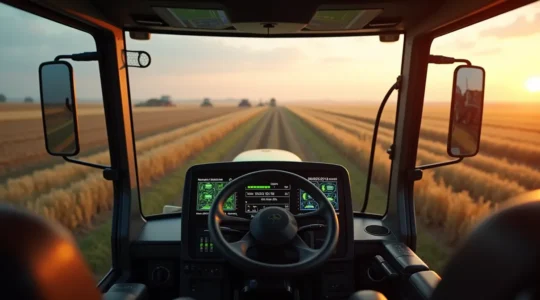
Unlocking Profit: How Tractor Telemetry Slashes Fleet Costs Beyond Fuel
Tractor telemetry is not an IT expense; it’s a financial management tool that directly impacts your P&L by transforming operational data into quantifiable cost reductions. Monitoring idle time reveals hidden costs in depreciation and warranty depletion, not just fuel burn….
Read more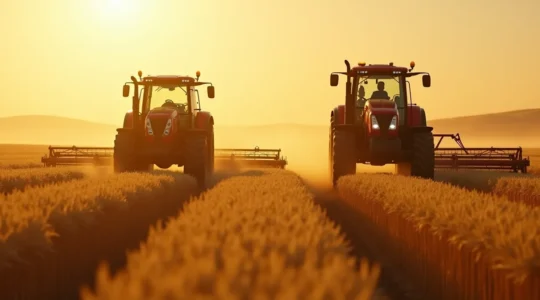
Smart Implements vs. New Tractors: Where to Invest for Efficiency?
The fastest way to boost farm efficiency isn’t buying a new tractor, but by upgrading the intelligence of your existing equipment. Smart sprayers and section controls can cut input costs by up to 50%, often paying for themselves in 3-4…
Read more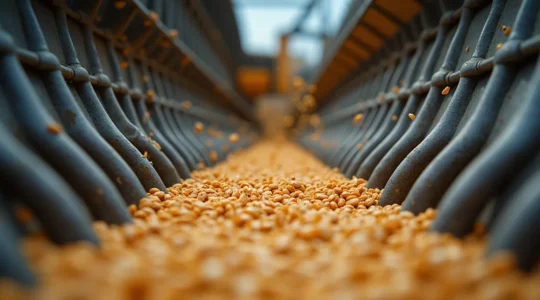
How to Adjust Rotor Speed to Minimize Cracked Grain
Contrary to popular belief, simply slowing down your rotor is not the key to eliminating cracked grain; it can even make things worse. True grain quality comes from achieving “threshing equilibrium,” where rotor speed and concave clearance work in tandem…
Read more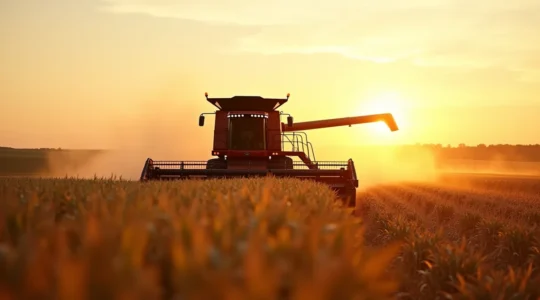
How to Reduce Harvest Losses in High-Yielding Corn?
In summary: High-yield corn overwhelms standard settings; losses stem from material flow bottlenecks, not just speed. Perform a “kill stall” to scientifically diagnose whether losses originate at the header, rotor, or cleaning shoe. Optimize the cleaning system as a unit;…
Read more
Are Autonomous Tractors Viable for Farms Under 500 Hectares?
The viability of autonomous tractors on mid-sized farms hinges less on futuristic technology and more on a complete operational and financial re-architecture of the farm itself. Retrofit kits offer a faster ROI (2-3 years) by upgrading existing assets, drastically lowering…
Read more
No-Till vs. Conventional: Which Protocol Suits Your Soil?
The most profitable tillage system isn’t a one-size-fits-all method, but a tailored approach based on diagnosing your specific soil conditions and operational goals. Heavy clay soils can cause yield penalties in no-till systems, while sandy or loamy soils may see…
Read more