In summary:
- Effective vaccination is a system of critical control points, not just a series of injections.
- Maternal antibodies in calves can neutralize early vaccines, making timing a crucial factor for efficacy.
- Cold chain discipline is non-negotiable; temperature deviations can render both live and killed vaccines useless.
- Strict needle hygiene and robust quarantine protocols are essential biosecurity measures to prevent disease spread.
- Training your entire team on these protocols ensures the integrity of your herd’s immunity.
Managing a vaccination program for a 200-head herd is a complex logistical challenge where failure is not an option. Many operations focus on the “what”—which vaccines to give—while overlooking the “how.” Standard advice often revolves around basic principles like following label instructions or consulting a veterinarian. While correct, this approach fails to address the systemic vulnerabilities that lead to immunity gaps and costly disease outbreaks. The true challenge lies not in purchasing vaccines, but in executing a protocol with military precision, where every step is a potential point of failure.
The key to building resilient herd immunity is to shift from a task-based mindset to a systems-based one. This requires viewing your vaccination program as a chain of critical control points, from the moment a vaccine arrives on your farm to the documentation of its administration. The most expensive vaccine is the one that doesn’t work. This failure can be due to improper timing in calves, a momentary lapse in cold chain discipline, or a subtle error in needle hygiene. These aren’t minor details; they are fundamental breaches in your biosecurity armor.
This guide moves beyond the basics. We will dissect the critical control points of a successful vaccination protocol, treating it as the professional management system it must be. We will analyze why early calf vaccinations can be useless, how to organize your farm refrigerator for maximum vaccine viability, and how to make informed decisions on vaccine types for your most vulnerable animals. By mastering these protocols, you can transform your vaccination schedule from a recurring task into a strategic asset that safeguards the health and profitability of your entire herd.
For those who prefer a visual format, the following video provides a practical demonstration of proper vaccine administration techniques, complementing the strategic protocols outlined in this guide.
This article provides a systematic breakdown of the essential components for a robust herd health program. The following table of contents outlines the key areas we will cover to ensure your vaccination strategy is both effective and compliant.
Table of Contents: A Comprehensive Guide to Herd Vaccination Management
- Why Vaccinating Calves Too Early Makes Shots Useless?
- How to Organize a Farm Fridge to Keep Vaccines Viable?
- Modified Live or Killed: Which Vaccine Is Safer for Pregnant Cows?
- The Needle Hygiene Mistake That Spreads Bovine Leukosis
- When to Administer Boosters to Ensure Peak Immunity?
- Test-and-Wait or Treat-All: Which Quarantine Strategy Is Safer?
- How to Train Seasonal Workers on Hygiene to Prevent Recalls?
- How to Quarantine New Stock to Prevent Epizootic Outbreaks?
Why Vaccinating Calves Too Early Makes Shots Useless?
A common and costly error in herd management is vaccinating calves at too young an age. This is not about saving time; it’s about wasting resources and creating a false sense of security. The reason lies in maternal immunity. Calves receive passive immunity through colostrum, which contains antibodies from the dam. These maternal antibodies are highly effective at protecting the calf, but they also identify and neutralize the antigens in most vaccines, rendering the injection ineffective. It’s a biological paradox: the very protection given by the mother actively interferes with our attempts to build long-term immunity.
The duration of this maternal protection is a critical variable. While it varies between animals, Cornell University research indicates that maternal immunity can persist for up to 4 months. Vaccinating during this period, particularly before 2 months of age, means you are likely fighting against the calf’s own temporary defenses. The “immunity window” of vulnerability opens as these maternal antibodies wane, but before the calf’s own immune system is fully primed. Your protocol must target this specific window.
To bypass this issue, some protocols utilize intranasal vaccines. These are administered in the nose and stimulate a local immune response on mucosal surfaces, which is less likely to be blocked by maternal antibodies circulating in the bloodstream. For injectable vaccines, the strategy is to wait. A robust protocol involves timing the initial vaccination course between 2 and 4 months of age and ensuring a booster shot follows 3-4 weeks later. High-risk calves, such as those from difficult births or twins, may require an adjusted schedule, as their colostrum intake and subsequent passive immunity could be compromised. Testing colostrum quality with a Brix refractometer (aiming for a minimum 22% reading) can provide data to stratify these risks.
How to Organize a Farm Fridge to Keep Vaccines Viable?
A disorganized farm refrigerator is not a matter of poor housekeeping; it is a critical failure in your biosecurity system. Vaccines are sensitive biological products, and their efficacy is directly tied to maintaining a strict temperature range, a practice known as cold chain discipline. Both Modified Live Vaccines (MLV) and Killed Vaccines are fragile. Freezing can destroy the live organisms in MLVs or cause the release of endotoxins in killed products, leading to adverse reactions or complete vaccine failure. Conversely, excessive heat degrades the antigens, rendering them useless.
The interior of your vaccine refrigerator must be managed as a controlled environment. The target temperature for most cattle vaccines is between 35-45°F (2-7°C). Storing vaccines on the door shelves is a common mistake, as temperatures fluctuate wildly with every opening. Instead, vaccines should be stored in the central part of the unit, away from the freezing elements. A dedicated, calibrated thermometer that records minimum and maximum temperatures is a non-negotiable piece of equipment to monitor for fluctuations.
The following table, based on industry guidelines, outlines the specific storage requirements and critical failure points for common vaccine types. As an analysis from the UK’s Agriculture and Horticulture Development Board shows, shelf life after opening is extremely limited, especially for MLVs.
| Vaccine Type | Storage Temperature | Shelf Life After Opening | Critical Failure Points |
|---|---|---|---|
| Modified Live Vaccines | 35-45°F (2-7°C) | 1 hour after reconstitution | Freezing destroys organisms |
| Killed Vaccines | 35-45°F (2-7°C) | Follow label directions | Freezing releases endotoxins |
| Bacterins | 35-45°F (2-7°C) | Use same day | Temperature fluctuations |
Chute-side management is just as critical. The Nebraska Beef Quality Assurance program has demonstrated effective protocols: using insulated coolers with ice packs (separated by a towel to prevent direct contact and freezing) for transport, protecting syringes from direct sunlight, and mixing only the amount of MLV that can be used within one hour. This rigorous approach ensures that cold chain discipline is maintained from the fridge to the animal.

An organized system with clear labeling and designated zones for different vaccine types, as shown above, prevents costly errors. Expired or compromised products must be discarded immediately. This level of organization is not optional; it is a core component of a professional herd health program.
Modified Live or Killed: Which Vaccine Is Safer for Pregnant Cows?
The decision between using a Modified Live Vaccine (MLV) or a Killed Vaccine in your breeding herd, particularly in pregnant cows, is a high-stakes choice with significant implications for fetal health. There is no single correct answer; the optimal choice depends on your herd’s specific status, history, and risk profile. An MLV contains a weakened but live version of the pathogen, which stimulates a strong and long-lasting immune response. A killed vaccine uses an inactivated pathogen, which is safer but typically elicits a shorter-lived immunity and may require more frequent boosters.
The primary risk with MLVs is the potential for the weakened virus to cross the placental barrier and cause abortion or birth defects in the fetus. This is especially true for diseases like Infectious Bovine Rhinotracheitis (IBR) and Bovine Viral Diarrhea (BVD). For this reason, the standing recommendation is to never use an MLV in pregnant cows unless they were properly vaccinated with that same MLV before breeding. The immune system of a properly primed animal will recognize and neutralize the vaccine virus before it can harm the fetus.
The Cornell University College of Veterinary Medicine provides a clear directive on this matter, reinforcing the need for caution and strict herd segmentation. As they state in their guidelines on vaccination strategies:
MLV vaccines can be used in minimally stressed calves that are well separated from pregnant cows. A warning against exposure of pregnant cattle to this vaccine is present on the label.
– Cornell University College of Veterinary Medicine, Vaccination Strategies to Maximize Preventive Health
For maximum safety in a mixed or unverified herd, killed vaccines are the default choice for pregnant animals. A strategic approach involves building a foundation of immunity in heifers before their first breeding season using MLVs. Once pregnant, their booster shots can be switched to killed products. Consulting your veterinarian to screen for Persistently Infected (PI) BVD animals is another critical step, as these individuals can shed massive amounts of virus and undermine any vaccination program. A documented vaccine history for every animal is essential for making these critical decisions year after year.
The Needle Hygiene Mistake That Spreads Bovine Leukosis
In a large-scale vaccination effort, the temptation to reuse needles to save time and money is a dangerous and misguided economy. Each needle pass from one animal to another becomes a potential transmission event for blood-borne diseases. This is not a theoretical risk; it is a primary vector for the spread of pathogens like Bovine Anemia associated with Theileria orientalis Ikeda and Bovine Leukosis Virus (BLV). An operation can have a perfect vaccine schedule and cold chain, only to actively spread disease through poor injection practices.
The governing principle must be one needle, one animal whenever feasible. However, in large, fast-moving operations, guidelines provide a minimum standard for harm reduction. The Nebraska BQA guidelines recommend changing needles every 10-15 head at a minimum. Exceeding this number significantly increases the risk of creating iatrogenic (medically-induced) infections. Needles become dull with each use, causing more tissue damage, and can become contaminated with microscopic amounts of blood sufficient to transmit disease.
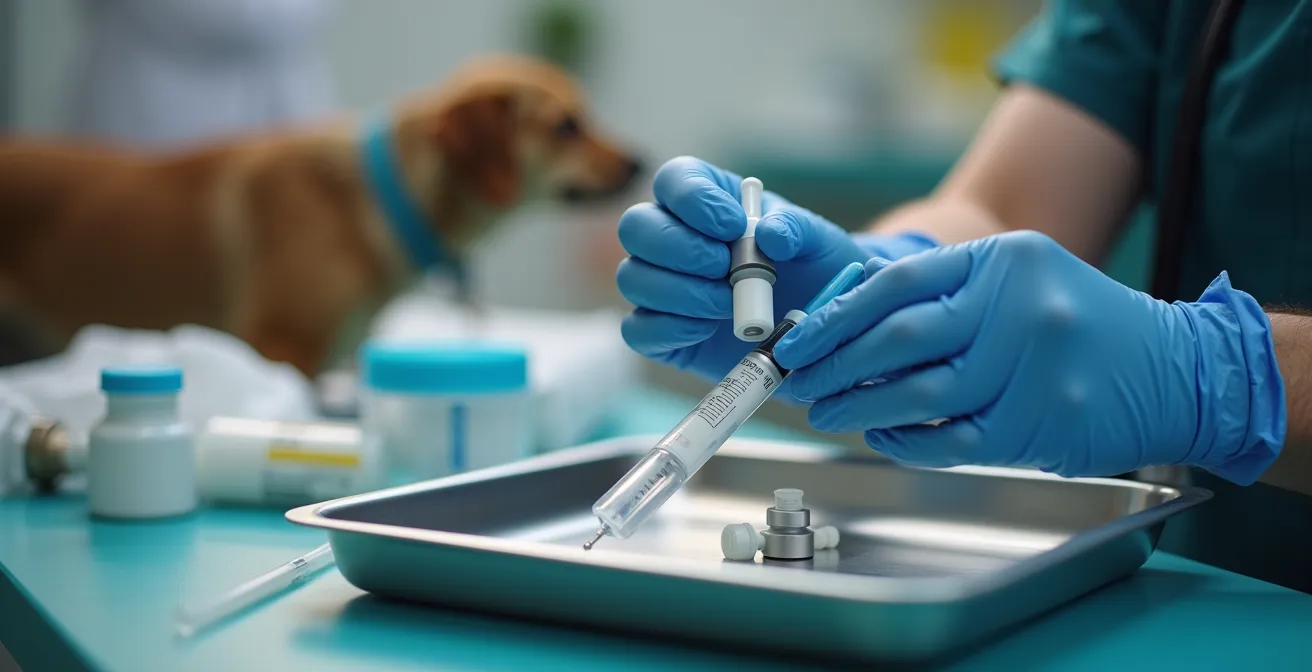
A systematic approach to needle hygiene is a critical control point. As documented by the University of Maine Extension, herds that successfully reduced blood-borne disease transmission implemented strict chute-side protocols. This includes using new, sterile 16-18 gauge needles for each animal (or adhering to the 10-15 head maximum), establishing dedicated, puncture-proof sharps containers within arm’s reach at the chute, and ensuring all injection sites are clean. For injection location, all shots should be administered in the neck triangle to preserve meat quality, a core tenet of Beef Quality Assurance.
Equipment like multi-dose syringes must also be managed. If a needle is changed, the syringe itself could still be contaminated. A truly rigorous protocol involves not just changing needles but also having multiple syringes on hand to switch out and disinfect between groups of animals. This level of discipline prevents your vaccination program from becoming a disease-spreading event.
When to Administer Boosters to Ensure Peak Immunity?
Primary vaccination courses are only the beginning of building herd immunity. The booster shot is what solidifies and extends that protection. Administering a booster at the right time is critical to trigger a strong anamnestic (memory) immune response, leading to a higher and more sustained level of antibodies. Timing this incorrectly—either too soon, too late, or during a period of high stress—can severely compromise the effectiveness of your entire vaccination protocol. The goal is to have the herd’s collective immunity at its absolute peak during periods of highest risk.
Research provides a clear timeline for this process. Following a booster, the immune system responds rapidly. According to Cornell research, peak antibody levels typically occur 10-14 days post-booster. This two-week window is a crucial piece of data for strategic planning. For example, if you are preparing animals for the stress of shipping or commingling with new stock, the booster should be administered at least two to three weeks prior to that event, ensuring they face the challenge with maximum protection. Vaccinating a sick or highly stressed animal is counterproductive, as the stress hormone cortisol suppresses the immune system, leading to a poor vaccine response.
A successful booster strategy is proactive, not reactive. It anticipates challenges and prepares the herd in advance. This requires a well-documented calendar and adherence to label-specified revaccination intervals. For breeding stock, scheduling boosters approximately four weeks before the start of the breeding season ensures that immunity is high to protect against diseases that cause early embryonic death.
Your Action Plan: Strategic Booster Timing for Maximum Protection
- Schedule boosters 4 weeks before the breeding season to maximize fertility protection.
- Avoid administering vaccines during high-stress events like weaning, shipping, or extreme weather.
- Time boosters to be completed 2-3 weeks before commingling with any new stock.
- Follow the vaccine label’s directions for revaccination intervals with absolute precision.
- Validate protocol efficacy by testing antibody titers on a small sample (10-15 animals).
Test-and-Wait or Treat-All: Which Quarantine Strategy Is Safer?
Introducing new animals is one of the single greatest biosecurity risks to a closed herd. A single infected animal can introduce a pathogen that undermines years of careful health management. The core question for any quarantine protocol is how to balance risk mitigation with cost and logistics. The two primary philosophies are “Treat-All,” where every incoming animal receives a standardized battery of vaccinations and parasiticides, and “Test-and-Wait,” a more diagnostic-led approach.
The “Treat-All” approach is simpler and often faster. It assumes a baseline level of risk and applies a broad-spectrum preventative protocol. This can be effective for low-risk animals coming from known, high-health-status herds. However, it does not screen for animals that are persistently or subclinically infected with diseases like BVD or Johne’s disease. These animals may not show symptoms but can act as “Typhoid Marys,” shedding pathogens and infecting the main herd despite being vaccinated.
A “Test-and-Wait” strategy is more rigorous and provides a higher level of security, making it the safer option for high-risk animals or herds with high genetic or economic value. This involves holding animals in strict isolation while diagnostic tests are run for key diseases. A prime example is testing for BVD-PI (Persistently Infected) status. A PI animal cannot be cured and will shed the virus for life, so identifying and culling these individuals before they enter the herd is paramount. This strategy is more expensive and time-consuming upfront, but it prevents catastrophic downstream losses.
As shown in risk-stratified quarantine protocols documented by Oklahoma State Extension, a hybrid approach is often the most practical. High-risk cattle, such as those from auction markets with unknown histories, undergo a comprehensive 60-day isolation with extensive testing for BVD-PI, brucellosis, and tuberculosis. In contrast, low-risk animals from a single, known closed herd might undergo a shorter 30-day quarantine with a modified, less intensive testing and treatment protocol. This tiered strategy allows managers to allocate resources efficiently while maintaining a robust biosecurity barrier against the most significant threats.
How to Train Seasonal Workers on Hygiene to Prevent Recalls?
Your herd’s health protocol is only as strong as its weakest link, and often, that link is an untrained or poorly supervised worker. Seasonal or multilingual staff may not fully grasp the “why” behind critical hygiene and handling procedures, leading to errors that can compromise vaccine efficacy or even lead to violative drug residues and recalls. Effective training must be simple, repeatable, and visual.
Complex written instructions in a single language are destined to fail in a diverse work environment. The most effective training programs rely on visual Standard Operating Procedures (SOPs). This involves creating waterproof, durable posters with clear pictograms or photos for each key step: proper vaccine handling, correct injection site location (the neck triangle), needle-changing frequency, and sharps disposal. These visual aids serve as a constant, language-agnostic reminder at the point of work, such as at the chute or in the medicine room.
The “See One, Do One, Teach One” method is a highly effective hands-on training cycle. A new worker first observes an experienced team member perform the task correctly (See One). They then perform the task themselves under direct supervision (Do One). Finally, they demonstrate their understanding by explaining the process to the supervisor or another trainee (Teach One). This confirms comprehension, not just mimicry. Implementing a buddy system, where a new employee is paired with a seasoned veteran for their initial shifts, provides continuous reinforcement. This entire process must be documented, with each worker signing off on their training completion.
Finally, it’s a systemic responsibility to ensure that all health interventions are coordinated. As the RUMA Alliance emphasizes, professional oversight is key. Their guidelines state:
The prescribing veterinary surgeon or adviser must be made aware of all other vaccination programmes and medications used in the herd so that adverse reactions can be avoided.
– RUMA Alliance, Responsible Use of Medicines in Agriculture Guidelines
This principle extends to your team. Workers must be trained to report any other treatments an animal has received to avoid dangerous interactions. Regular spot-checks and team rewards for perfect compliance can transform hygiene from a chore into a shared team responsibility.
Key Takeaways
- Vaccine success depends on a system of control points: timing, storage, hygiene, and quarantine are as important as the vaccine itself.
- Maternal antibody interference, cold chain breaches, and needle reuse are the three most common—and preventable—causes of vaccination failure.
- A risk-based approach, from choosing MLV vs. Killed vaccines to designing quarantine protocols, allows for safer and more cost-effective herd management.
How to Quarantine New Stock to Prevent Epizootic Outbreaks?
A robust quarantine protocol is the single most effective biosecurity measure you can implement to protect your herd from external threats. It is a non-negotiable firewall. The purpose of quarantine is to provide a period of observation and testing to identify and contain diseases before they can spread to your established herd. An outbreak of a disease like IBR, BVD, or Mycoplasma bovis can be financially devastating, and a proper quarantine is your primary defense.
The first rule of quarantine is absolute physical separation. The isolation facility must be located where there is no possibility of fence-line contact, shared water sources, or aerosol transmission with the main herd. A distance of at least 30 feet is a bare minimum. Personnel should manage the quarantined animals last in their daily routine and use dedicated equipment, boots, and coveralls to avoid cross-contamination. The duration of this isolation is critical. While some protocols use a shorter period, the Oklahoma State Extension recommends a 30-day minimum, with 60 days being preferred for higher-risk animals. This extended period allows for the incubation of most common diseases and provides time for comprehensive testing and vaccination.
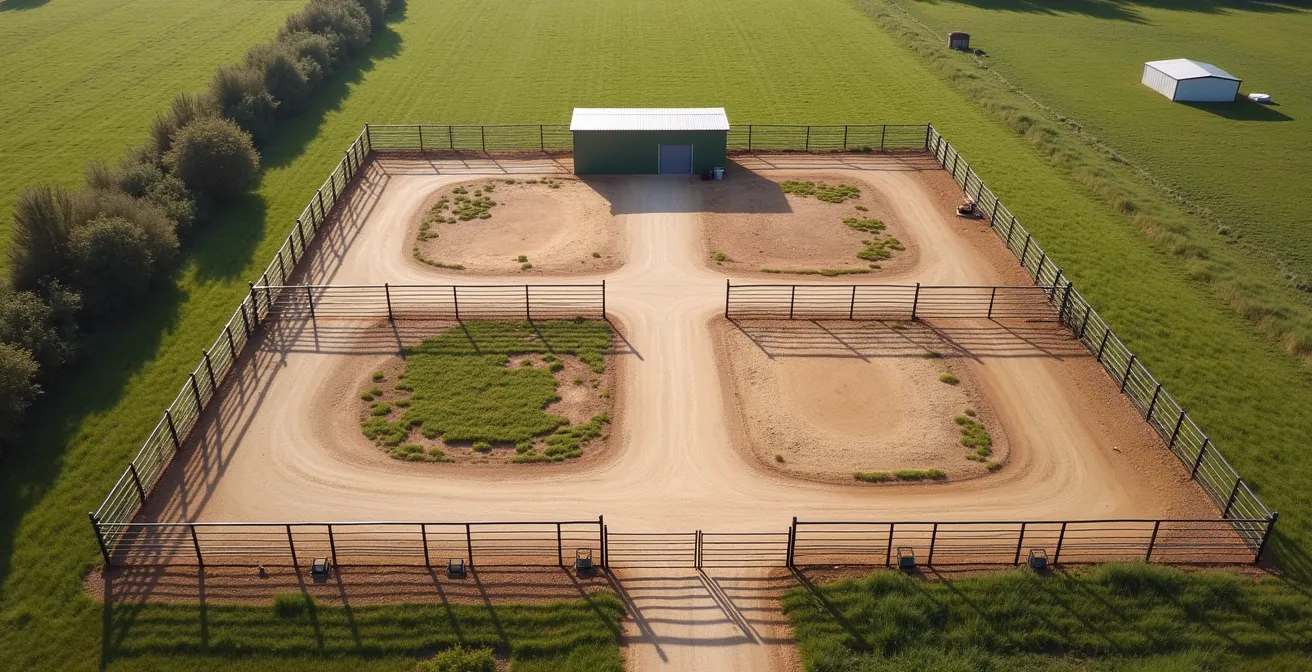
A successful quarantine is an active, not passive, process. It should follow a strict calendar of events. Upon arrival (Day 1), animals should undergo a visual inspection and be tested for BVD-PI. They can receive their primary vaccinations around Day 7. Subsequent weeks are used for health assessments, parasite screening, and administering booster shots. A crucial step, often overlooked, is the use of sentinel animals. Around Day 25, a few animals from the main herd (preferably of lower value) can be introduced to the quarantine group. If they remain healthy after a week, it is a strong indicator that the new animals are not shedding any dangerous pathogens. Only after a final veterinary examination and clearance should the new stock be gradually integrated into the main herd.
To fully protect your operation, the next step is to formalize these protocols into a written, actionable herd health plan. Review this document with your veterinarian and ensure every member of your team is trained on its execution. This transforms strategy into daily practice, providing the highest level of protection for your herd.