Livestock and Cattle
Raising livestock and cattle successfully requires far more than providing food and shelter. Whether you’re managing a small herd or overseeing a large-scale operation, the intersection of animal health, nutrition, housing, and veterinary care determines both your animals’ wellbeing and your operation’s profitability. Each decision—from vaccine selection to barn ventilation—creates ripple effects throughout your entire system.
The challenges facing livestock producers have evolved considerably. Modern operations must balance productivity with animal welfare, navigate complex health protocols, and optimize resource efficiency. Understanding the fundamental pillars of livestock management helps you make informed decisions that prevent problems rather than simply reacting to them. This comprehensive overview explores the core areas every livestock producer should master to build a thriving, sustainable operation.
Vaccination and Herd Health Management
Protecting your herd from infectious disease starts with a strategic approach to vaccination. Think of your vaccination program as building a fortress—every component must work together, and timing matters as much as the materials you use.
Understanding Vaccine Types and Timing
The choice between modified live vaccines (MLV) and killed vaccines isn’t simply a matter of preference—each serves distinct purposes. Modified live vaccines typically provide faster, more robust immunity and often require fewer boosters, making them ideal for healthy animals facing immediate disease pressure. However, they carry risks for pregnant animals and immunocompromised individuals. Killed vaccines offer superior safety profiles but generally require multiple doses and more precise booster timing to achieve protective immunity.
Booster timing determines whether your vaccination program succeeds or fails. Most primary vaccinations require a follow-up dose within three to four weeks to fully activate the immune system’s memory response. Missing this window or delaying boosters can leave animals vulnerable during high-risk periods, essentially wasting your initial investment.
Managing Maternal Antibody Interference
Young animals receive passive immunity through colostrum, which provides crucial early protection but creates a vaccination dilemma. These maternal antibodies can neutralize vaccines administered too early, preventing the calf from developing its own active immunity. Most producers face a critical window between when maternal protection wanes and when vaccines can effectively stimulate the animal’s immune system—typically between two and six months of age, depending on colostrum quality and the specific pathogen.
Strategic planning helps navigate this challenge. Testing maternal antibody levels or following age-based protocols specific to your herd’s disease history ensures vaccines are administered when they’ll actually work, not just when the calendar says it’s time.
Cold Chain Storage Best Practices
Even the most expensive vaccine becomes worthless if storage conditions aren’t maintained. Vaccines are biological products containing live organisms or delicate proteins that degrade rapidly at incorrect temperatures. Establishing a reliable cold chain on your farm requires several critical elements:
- Dedicated refrigeration units with accurate temperature monitoring (not household refrigerators that experience frequent temperature fluctuations)
- Backup power sources or ice packs to maintain temperature during power outages
- Temperature logs to verify consistent storage conditions and identify equipment failures
- Proper rotation systems ensuring oldest vaccines are used first
- Insulated carriers for transport between storage and application sites
Additionally, never reuse needles between animals. This seemingly cost-saving practice creates a direct pathway for transmitting blood-borne diseases like bovine leukosis and can introduce contamination that causes injection site infections and abscesses.
Nutrition and Feed Formulation Fundamentals
Nutrition represents your single largest variable cost and the most powerful tool for influencing animal performance. Optimizing feed isn’t about maximizing any single nutrient—it’s about achieving the precise balance that supports health while minimizing waste.
Optimizing Feed Conversion Ratios
Feed conversion ratio measures how efficiently animals transform feed into body weight or milk production. A dairy cow with poor feed efficiency might consume the same ration as her herdmate but produce significantly less milk, directly impacting your profitability. Feed conversion depends on multiple factors: genetics certainly play a role, but ration formulation, feed quality, and animal health status often matter more.
Formulating rations to optimize conversion starts with understanding your animals’ specific requirements based on their production stage, body condition, and environmental conditions. A high-producing dairy cow requires entirely different energy and protein ratios than a dry cow or a finishing steer. Regular body condition scoring helps you assess whether your ration formulation matches actual animal needs or requires adjustment.
Protein Sources and Balance
The equation isn’t as simple as “more protein equals better performance.” Excess protein actually wastes both energy and money. When animals consume more protein than they need, their bodies must convert the excess into energy—an inefficient process that produces heat and ammonia as byproducts. You’re essentially paying premium prices for protein supplements only to have your animals burn them as expensive fuel while creating additional waste management challenges.
Selecting protein sources requires evaluating both cost and quality. Soybean meal remains the gold standard due to its excellent amino acid profile and consistent quality, but alternative sources like distillers grains, canola meal, or cottonseed meal may offer economic advantages when properly balanced. The key lies in analyzing forage quality first—knowing your base protein content from hay, silage, or pasture allows you to select concentrates that fill gaps rather than create expensive surpluses.
Preventing Metabolic Disorders
Acidosis represents one of the most common yet preventable metabolic disasters in livestock operations. This condition occurs when rapidly fermentable carbohydrates overwhelm the rumen’s capacity to buffer acid production. The danger intensifies with low fiber intake—fiber stimulates chewing and saliva production, which naturally buffers rumen pH. Without adequate effective fiber, even moderate grain feeding can trigger acidosis.
Total Mixed Rations (TMR) help prevent sorting behavior that leads to acidosis, but only when properly prepared. TMR mixing time significantly impacts ration consistency—under-mixing allows animals to sort ingredients and consume unbalanced diets, while over-mixing destroys fiber structure and reduces its effectiveness. Most operations find optimal mixing occurs within eight to twelve minutes, though this varies with equipment and ingredients.
Housing Infrastructure That Supports Animal Health
Your facilities shape animal health outcomes as profoundly as any vaccination program or feed ration. Well-designed infrastructure prevents disease, reduces stress, and improves productivity, while poor housing actively undermines your other management efforts.
Ventilation as Disease Prevention
Ask any livestock veterinarian about the single most important housing factor, and the answer will consistently be ventilation. Respiratory diseases represent the leading cause of morbidity and treatment costs in most livestock operations, and inadequate air exchange sits at the root of most respiratory outbreaks. Proper ventilation removes moisture, dilutes airborne pathogens, and prevents ammonia accumulation—all without creating drafts that stress animals.
The challenge lies in balancing fresh air delivery with temperature control. Cold stress and drafts compromise immunity, but tightly sealed buildings to conserve heat create pathogen-concentrated environments. Natural ventilation systems work well in moderate climates but require careful design to ensure air movement during calm weather. Mechanical systems offer precise control but demand backup power and regular maintenance to remain effective.
Flooring and Hoof Health
Lameness consistently ranks among the top three health issues affecting livestock profitability, and flooring materials directly influence hoof health. Concrete offers durability and easy cleaning but provides poor traction when wet and no cushioning for joints. Rubber matting improves cow comfort and traction considerably but requires proper installation and maintenance to prevent bacterial growth underneath. Slatted floors facilitate waste removal but can cause hoof and leg injuries if slat spacing or surface texture isn’t appropriate for your animal size.
No perfect flooring material exists—each option involves tradeoffs between animal comfort, labor efficiency, hygiene, and cost. The best choice depends on your housing system, management intensity, and animal type.
Housing Systems and Animal Welfare
The debate between group housing versus individual stalls, particularly for pregnant sows or calves, reflects broader tensions between efficiency, animal welfare, and labor management. Individual housing simplifies monitoring, allows precise feeding, and reduces competition stress, but limits natural behaviors and social interaction. Group housing promotes natural social structures and allows greater movement but introduces competition dynamics, makes individual monitoring more difficult, and can increase aggression-related injuries.
Regardless of your housing approach, preventing ammonia buildup in enclosed spaces remains critical. Ammonia irritates respiratory tract tissues, impairing the protective mucus layer and increasing susceptibility to respiratory pathogens. Concentrations above twenty parts per million—detectable by human smell—indicate ventilation or manure management problems requiring immediate correction.
Even lighting deserves strategic consideration. Optimizing lighting for reproductive cycles can improve breeding efficiency, particularly in seasonal breeders. Photoperiod manipulation influences hormone production, affecting everything from puberty onset to ovulation timing and milk production in dairy species.
Proactive Veterinary Management
The most valuable veterinary visits happen when nothing appears wrong. Shifting from reactive emergency calls to proactive health management fundamentally changes your operation’s health outcomes and economics.
Building a Strong Veterinarian-Client-Patient Relationship
Establishing a formal VCPR (Veterinarian-Client-Patient Relationship) provides much more than legal access to prescription medications. This relationship creates a knowledge partnership where your veterinarian understands your facilities, management practices, disease history, and production goals. With this context, they can provide tailored recommendations rather than generic advice, identify subtle patterns suggesting emerging problems, and help you make informed decisions about treatment protocols.
A valid VCPR requires that your veterinarian has recently examined your animals, has sufficient knowledge of your operation to make diagnoses, and remains available for follow-up care. This typically means scheduled visits rather than relying solely on on-demand emergency calls.
Scheduled Health Monitoring
Subclinical diseases—health problems not yet causing obvious symptoms—often cost more than dramatic outbreaks. A cow with subclinical mastitis produces less milk and requires eventual treatment, but without obvious signs, she may go undetected for weeks or months, silently draining profits. Subclinical pneumonia slows weight gain in feedlot cattle, adding days to reach market weight without the clear symptoms that trigger treatment.
Regular scheduled veterinary visits focused on early detection through systematic monitoring—bulk tank sobriety cell counts, routine pregnancy checks, body condition scoring, and targeted diagnostic testing—identify these silent profit thieves before they become crises. The economics consistently favor prevention and early detection over treating advanced disease.
Preventing Costly Compliance Issues
Antibiotic residue violations carry severe consequences, from condemned carcasses to lost market access and regulatory sanctions. Most violations result from poor record-keeping or failure to observe withdrawal times rather than intentional misuse. Systematic protocols for recording all treatments, calculating withdrawal periods, and identifying treated animals prevent these entirely avoidable disasters.
Similarly, timing pregnancy checks strategically serves multiple purposes beyond confirming conception. Early pregnancy detection allows timely culling decisions for open cows, optimizes nutrition for pregnant animals, and helps predict calving dates for labor planning and facility preparation. Most operations benefit from initial checks around thirty to forty days post-breeding, with follow-up confirmation at sixty to ninety days.
Success in livestock and cattle production emerges from integrating these fundamental areas into a cohesive management system. Each component—vaccination, nutrition, housing, and veterinary care—reinforces the others. Strong vaccination programs work better in well-ventilated facilities, optimal nutrition supports immune function, and proactive veterinary relationships help fine-tune all aspects of your operation. By understanding these core principles and their interconnections, you build the foundation for a productive, profitable, and sustainable livestock enterprise.

Why Monthly Veterinary Audits Save Money on Emergency Calls
A monthly veterinary visit is not a recurring expense; it is a strategic financial audit that systematically de-risks your operation and protects your revenue. Proactive audits convert hidden losses from issues like subclinical mastitis into measurable profit by focusing on…
Read more
Designing Future-Proof Breeding Facilities: A Guide to Meeting Welfare Standards and Boosting Productivity
Designing for animal welfare is not an operational expense but a strategic investment in systemic risk mitigation and measurable efficiency. Engineered air quality and ergonomic flooring directly reduce mortality and injury, lowering veterinary costs. Biosecure traffic flow and automated systems…
Read more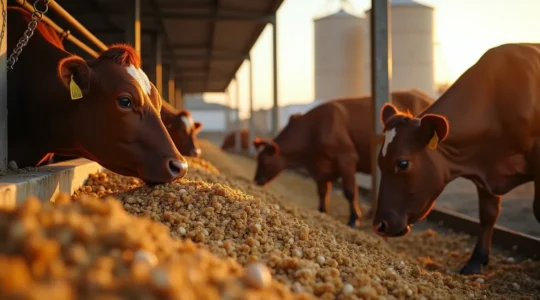
How to Balance Protein and Fiber Rations for Maximum Weight Gain?
Maximizing weight gain is not about hitting abstract protein targets, but about managing the metabolic cost and economic efficiency of every feed component. Overfeeding protein creates a direct metabolic burden that can impair fertility and waste money, even if it…
Read more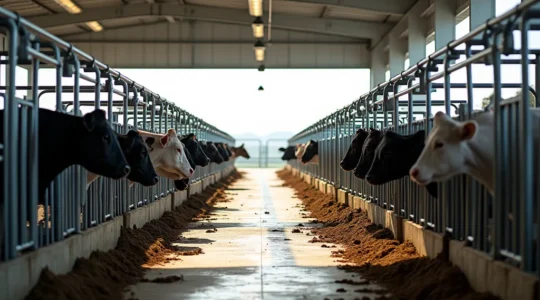
How to Manage Vaccination Schedules for a 200-Head Herd?
In summary: Effective vaccination is a system of critical control points, not just a series of injections. Maternal antibodies in calves can neutralize early vaccines, making timing a crucial factor for efficacy. Cold chain discipline is non-negotiable; temperature deviations can…
Read more