Crops and Harvests
Successfully growing and harvesting crops is far more than scattering seeds and waiting for nature to take its course. It’s a complex orchestration of strategic decisions, precise timing, and continuous adjustments that begins months before the first seed touches soil and extends through the final combine pass. Every choice—from selecting seed varieties to determining the optimal harvest moment—creates ripples that ultimately determine whether a season ends in abundant yields or disappointing shortfalls.
Modern crop production demands a systems-thinking approach where planning, execution, and monitoring work together seamlessly. Understanding how pre-season decisions influence mid-season challenges, and how growing conditions shape harvest outcomes, empowers farmers to maximize both the quantity and quality of their production. This comprehensive overview explores the critical phases of crop production and harvest management, providing practical insights for optimizing each stage of the agricultural cycle.
Pre-Season Planning and Preparation
The foundation for a successful harvest is built long before planting day arrives. Think of pre-season planning as constructing the framework of a house—shortcuts or weaknesses in this phase create problems that become exponentially more difficult and expensive to fix later. A well-orchestrated pre-season strategy addresses procurement, equipment readiness, and workforce planning as interconnected elements of a comprehensive system.
Strategic Input Procurement
The timing of input purchases presents a classic risk-reward calculation that significantly impacts profitability. Early seed purchases often secure preferred genetics and varieties before supplies tighten, but they require capital commitment months ahead of planting. Waiting for potential discounts might save money, yet it risks settling for second-choice varieties or facing shortages entirely. The optimal approach typically involves analyzing historical price patterns, assessing current inventory levels across suppliers, and securing core genetics early while maintaining flexibility for opportunistic purchases on less critical inputs.
Similarly, input optimization based on market trends requires monitoring commodity price forecasts, fertilizer costs, and crop price projections simultaneously. When fertilizer prices spike but crop values remain stable, the return-on-investment calculation shifts, potentially favoring more conservative fertility programs. Conversely, when crop prices surge, intensified input packages become more economically justified. This dynamic decision-making process benefits from scenario planning—developing multiple input strategies based on different price conditions.
Equipment Readiness and Labor Scheduling
Equipment failures during critical windows don’t just cost repair time—they cost yield. A breakdown during the narrow planting window might force delayed planting that reduces season-length or compromises plant establishment. Pre-season equipment maintenance should follow a systematic checklist approach covering:
- Hydraulic system inspections and fluid changes
- Bearing lubrication and replacement of worn components
- Calibration of planting, spraying, and harvesting equipment
- Electrical system testing and sensor verification
- Preventive replacement of high-failure components
Labor planning presents similar challenges magnified by human unpredictability. Creating a labor schedule for peak operational times requires forecasting workload intensity across the season, identifying critical windows where delays compound rapidly, and building redundancy into staffing for those periods. Smart operations cross-train employees, establish relationships with seasonal labor pools well in advance, and create clear protocols that allow less-experienced workers to contribute effectively during crunch periods.
Maximizing Yield Potential During the Growing Season
Once crops emerge, the focus shifts from planning to active management and optimization. The growing season is where theoretical yield potential either gets realized or eroded through limiting factors, suboptimal decisions, or missed intervention windows. Understanding what constrains yield and how to correct deficiencies mid-season separates average from exceptional production.
Understanding Limiting Factors
Liebig’s Law of the Minimum provides a foundational principle: crop yield is determined by the scarcest resource, not the total resources available. Imagine a barrel made of staves of different heights—the water level can only rise to the height of the shortest stave, regardless of how tall the others are. In crop production, that shortest stave might be nitrogen availability, water supply, a micronutrient deficiency, or even light interception due to poor plant spacing.
This principle has profound implications. Adding more nitrogen when phosphorus is limiting won’t increase yield. Increasing population density when water is the constraint may actually decrease production. The key is identifying which factor currently limits yield, addressing it, then reassessing to find the next limiting factor. This diagnostic approach to maximizing output per hectare focuses resources where they generate actual returns rather than applying inputs uniformly regardless of need.
Variety Selection and Population Density
The genetic foundation matters immensely. Full-season hybrids versus short-season varieties present a fundamental trade-off between yield potential and maturity timing. Full-season genetics maximize the plant’s duration of photosynthesis and grain fill, typically delivering 5-15% higher yield potential in favorable conditions. However, they require the full growing season to mature properly and face greater risk from early frost or wet harvest conditions. Short-season varieties sacrifice some yield ceiling but mature earlier, enabling harvest in better conditions and reducing weather risk.
Population density amplifies these genetic differences. Pushing plant populations higher increases total leaf area for capturing sunlight and potentially raises overall photosynthesis. However, excessive density creates competition for water, nutrients, and light penetration to lower leaves. The risk of lodging when pushing population densities becomes acute—plants develop thinner stalks with weaker structural integrity, making them vulnerable to wind or heavy rain causing them to fall over before harvest. Lodged crops suffer yield loss, harvest efficiency plummets, and grain quality deteriorates from ground contact.
Mid-Season Crop Monitoring and Corrections
Crops communicate their nutritional status through subtle visual cues, but waiting for visible symptoms means deficiencies have already reduced yield potential. Tissue sampling techniques provide quantitative data about nutrient concentrations within plant tissues, revealing deficiencies weeks before they become visually apparent. The process involves:
- Collecting specific plant parts at defined growth stages (typically youngest fully-developed leaves)
- Submitting samples to analytical laboratories for nutrient concentration analysis
- Comparing results against sufficiency ranges for that crop and growth stage
- Applying corrective foliar or soil-applied nutrients if deficiencies are detected
Disease pressure represents another mid-season challenge requiring careful timing. Fungicide application timing aims to protect yield during critical growth phases—typically around flowering and early grain fill when infections have maximum yield impact. Apply too early, and protection wanes before the critical period. Apply too late, and infection has already compromised yield. Weather conditions, disease scouting intensity, and hybrid susceptibility all factor into these timing decisions, which in moderate disease environments can preserve 5-10% of yield potential.
Determining Crop Maturity and Harvest Timing
The harvest phase compresses months of investment and careful management into days or weeks of intensive operation. Harvesting too early sacrifices yield and quality while incurring excessive drying costs. Harvesting too late risks weather damage, lodging, shattering losses, and quality deterioration. Precision in determining maturity and sequencing harvest operations captures the maximum value from the growing season.
Physiological Maturity Indicators
Physiological maturity—the point where the plant has completed grain fill and further yield accumulation ceases—represents the theoretical optimal harvest timing if moisture weren’t a consideration. In corn, black layer formation provides a definitive physiological maturity indicator. This small dark layer appears at the base of kernels where they attach to the cob, marking the cessation of nutrient flow from the plant into the grain. At this point, grain moisture typically ranges from 25-35%, requiring field dry-down before harvest is practical.
Soybeans present different maturity signals. Testing for physiological maturity in soybeans involves monitoring pod and seed characteristics. Seeds reach maximum dry weight when they can no longer be dented by thumbnail pressure and pods have yellowed substantially. At this stage, moisture content typically sits around 50-60%, necessitating significant dry-down before combining.
The choice between desiccation versus natural dry-down impacts both timing and economics. Chemical desiccants accelerate crop dry-down by killing plant tissues, potentially advancing harvest by 7-14 days and enabling earlier field access for fall operations. However, desiccation adds input costs and requires precise application timing—too early sacrifices yield, too late provides minimal benefit. Natural dry-down costs nothing but extends the harvest window and increases exposure to weather risks.
Managing Harvest Sequence and Timing
The danger of frost damage before maturity looms over late-season production, particularly in northern growing regions or with full-season genetics. Frost before physiological maturity terminates grain fill prematurely, reducing test weight and overall yield. Frost after physiological maturity but before dry-down simply accelerates moisture loss, which may actually benefit harvest timing. This distinction makes maturity monitoring critical in frost-prone areas during September and October.
When fields contain multiple varieties with different maturity dates, optimizing harvest sequence requires balancing several factors simultaneously. Generally, priority follows this logic:
- Earliest-maturing varieties with adequate dry-down and good standability
- Later-maturing varieties approaching optimal moisture
- Lodging-prone fields regardless of maturity to minimize shattering losses
- Fields with difficult harvest conditions (terraces, waterways, obstacles) when equipment operators are fresh
- Longest-haul fields later to minimize time losses during peak harvest pressure
Weather forecasts heavily influence these decisions—an approaching wet period might justify harvesting slightly wetter grain to avoid extended field exposure.
Why Precision and Timing Define Success
Agriculture’s defining characteristic is compressed, inflexible windows for critical operations. Unlike manufacturing, where production schedules flex to accommodate delays, crop production operates within biological and meteorological constraints that ignore human schedules. This reality makes early-season delays compound into harvest failures through a cascade effect.
Consider a planting delay of two weeks. That delay shifts the entire crop development timeline, potentially causing pollination to coincide with July heat stress rather than milder June conditions. Delayed pollination means delayed maturity, pushing harvest into wetter October weather. Wet harvest conditions compact soils, reducing yields in following years. Equipment gets stuck, delaying harvest further. Grain enters storage at higher moisture, increasing drying costs and quality risks. A two-week spring delay can erode yield by 10-20% and create operational chaos six months later.
This interconnectedness demands proactive, systems-level thinking. Strategic planning and milestone tracking create accountability and early warning systems. When actual planting progress lags planned milestones by several days, successful operations shift resources—adding equipment, extending work hours, or adjusting priorities—to compress the gap before it expands uncontrollably. This disciplined approach to meeting harvest targets transforms vague seasonal goals into concrete weekly and daily objectives that guide resource allocation and identify problems while they remain manageable.
Ultimately, exceptional crop production results from viewing the entire cycle as interconnected phases where excellence in planning enables success in execution, where mid-season vigilance protects yield potential, and where precise harvest timing captures the value created throughout the season. Each decision ripples forward, creating either compounding advantages or cascading problems. By understanding these connections and managing each phase with both strategic vision and tactical precision, farmers transform biological potential into consistent, profitable harvests.
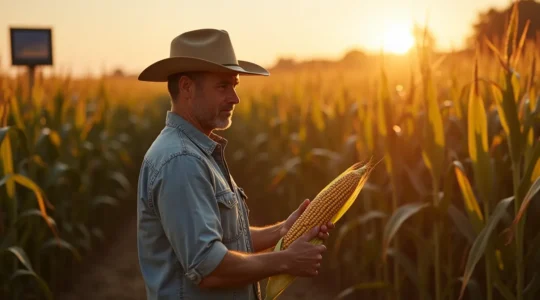
How to Forecast Optimal Harvest Windows Using Growing Degree Days?
In summary: Transform Growing Degree Days (GDDs) from a passive crop-stage metric into a proactive logistical planning tool for your entire harvest operation. Understand that key decisions, like planting date and hybrid selection, create a predictable, interconnected timeline that dictates…
Read more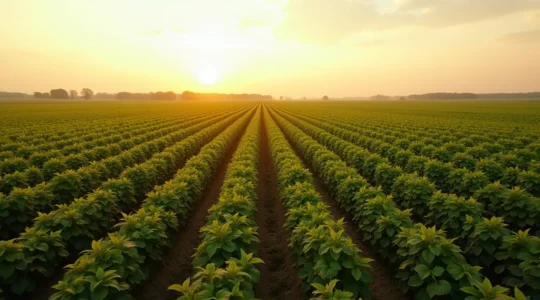
How to Push Soybean Yields Past the Plateau?
Breaking soybean yield barriers isn’t about spending more on inputs; it’s about surgically eliminating the specific agronomic and mechanical bottlenecks that cap your potential. Nutrient balance (like sulfur-to-nitrogen ratios) and precise timing are often more critical than total volume. Strategic…
Read more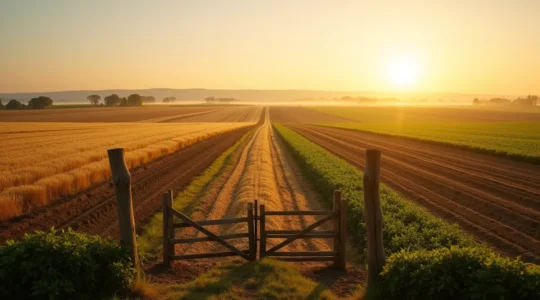
How to Plan Your Crop Calendar to Avoid Seasonal Bottlenecks?
The most effective crop calendar isn’t a static schedule; it’s a dynamic risk management portfolio where every decision is weighed by its financial impact. Timing is not just operational, it’s financial: A delay of a few days in planting can…
Read more