Blog
Modern farming operations face an unprecedented convergence of pressures that would have seemed unimaginable just a generation ago. Producers must simultaneously maximize economic returns, meet increasingly stringent regulatory requirements, satisfy evolving market quality specifications, maintain environmental stewardship, and transfer complex knowledge to their workforce. This multifaceted challenge requires farmers to think beyond traditional yield-focused metrics and embrace a more holistic approach to agricultural management.
Understanding how these dimensions interconnect is no longer optional—it’s essential for long-term survival in the agricultural sector. Whether you’re navigating the financial realities of transitioning to sustainable practices, decoding processor quality demands, or building compliance systems that actually work in the field, the path forward requires both strategic thinking and practical implementation. This comprehensive resource explores the critical pillars that define successful contemporary farming, offering insights into how experienced operators are balancing these competing demands while building resilient, profitable businesses.
Balancing Profitability with Environmental Responsibility
The tension between economic viability and environmental pressure represents perhaps the most fundamental challenge in modern agriculture. Farmers are increasingly caught between consumer demands for sustainably sourced products and the hard financial realities of operating a business with narrow profit margins. This isn’t simply an ideological debate—it’s a practical question that affects purchasing decisions, loan approvals, and market access.
Understanding the Financial Reality of Transition
Adopting more sustainable practices rarely delivers immediate financial returns. The transition period typically involves upfront capital investment, temporary yield reductions, certification costs, and a learning curve that can strain cash flow. Think of it like renovating a house while still living in it—you’re managing current operations while simultaneously building for the future. Successful operators approach this transition strategically, sequencing the adoption of sustainable practices in ways that minimize financial risk while demonstrating measurable progress to buyers and lenders.
Choosing Your Strategic Direction
The intensification versus extensification decision represents a fundamental fork in the road. Intensification focuses on maximizing output per unit area through technology, inputs, and precision management, while extensification spreads production across larger areas with lower input density. Neither approach is inherently superior—the optimal choice depends on factors including:
- Land availability and quality
- Access to capital and technology
- Market positioning and target buyers
- Labor availability and management capacity
- Regulatory environment and subsidy structures
Avoiding the Greenwashing Trap
As sustainability becomes a marketing imperative, the risk of greenwashing—making misleading environmental claims—has increased dramatically. This poses dangers not just to consumer trust broadly, but specifically to individual operations that may unintentionally overstate their environmental credentials. The most effective approach focuses on verifiable, specific claims supported by data: “reduced nitrogen application by 15% while maintaining yield” carries far more credibility than vague assertions about being “eco-friendly.”
Meeting Modern Compliance and Traceability Standards
Regulatory compliance has evolved from a background concern to a front-and-center operational requirement. Buyers—particularly processors, exporters, and major retailers—increasingly treat compliance documentation as non-negotiable, often implemented through standardized protocols like Good Agricultural Practices (GAP) certification. Understanding that compliance is fundamentally about systematic documentation rather than just following rules changes how farmers approach these requirements.
Why Traceability Has Become Essential
Traceability requirements reflect a fundamental shift in how supply chains manage risk. When a contamination issue arises, buyers need the ability to identify the exact source within hours, not days. This capability protects their brand reputation and limits financial exposure. For farmers, robust traceability systems increasingly serve as the entry ticket to premium markets. Operations that can document every input application, harvest date, and handling step gain competitive advantages in contract negotiations.
Implementing Effective Safety Protocols
Hygiene protocols for harvest workers, optimized chemical storage facilities, and systems to prevent pesticide residue violations all share a common thread—they require consistent execution by multiple people under time pressure. The best protocols balance thoroughness with practicality. For example, a color-coded system for harvest bins (blue for inspected, red for hold) communicates status instantly without requiring workers to read detailed labels or paperwork.
Paper Records Versus Digital Tools
The debate between traditional paper-based record-keeping and digital compliance tools ultimately comes down to three factors: accuracy, accessibility, and auditability. Paper systems remain perfectly legitimate if consistently maintained, but digital platforms offer advantages in searching historical records, generating reports for auditors, and reducing transcription errors. Consider that a single misplaced decimal point in a pesticide application log can trigger regulatory violations—digital systems with built-in validation can catch these errors before they become compliance failures.
Understanding Quality Specifications and Market Requirements
The quality metrics demanded by processors often seem arbitrary to producers focused on yield maximization. Why does a tomato processor reject loads based on Brix levels? Why do wheat buyers pay premiums for specific protein percentages? Understanding that processors aren’t being difficult—they’re managing their own production constraints—transforms these requirements from frustrating obstacles into strategic opportunities.
Decoding Processor Quality Demands
Every processor operates equipment optimized for specific input characteristics. A pasta manufacturer needs consistent protein content (typically 12-14% for durum wheat) because variations affect dough elasticity and cooking properties. Too low, and the pasta becomes mushy; too high, and it becomes tough and brittle. When farmers understand these downstream implications, quality specifications transform from arbitrary numbers into logical requirements that can be managed through variety selection, nitrogen timing, and harvest decisions.
Contract Negotiation and Quality Premiums
Quality-based contracts reward producers who can consistently deliver specifications that reduce processing costs or enable premium end products. The negotiation leverage comes not just from meeting specifications, but from reducing the processor’s risk. A grower who delivers loads with minimal foreign material contamination, consistent moisture levels, and predictable quality saves the processor money in sorting, drying, and quality control. These savings create room for premium pricing that can significantly improve farm profitability compared to commodity marketing approaches.
Timing Harvest for Quality Optimization
Harvest timing represents one of the most powerful—and underutilized—quality management tools available to farmers. Sugar content in processing crops, oil content in oilseeds, and phytonutrient levels in vegetables all follow predictable curves that can be tracked and optimized. Think of harvest timing like picking fruit at the farmers market—you can choose underripe (easier to handle, longer shelf life) or fully ripe (better flavor, higher quality). The optimal choice depends entirely on your target market and the premiums available for quality characteristics.
Building a Skilled and Informed Workforce
The complexity of modern farming operations has created a critical challenge: how do you transfer expertise to workers and keep pace with evolving science, regulations, and best practices? This isn’t simply about training—it’s about creating systems that embed knowledge into daily operations and preventing the loss of critical institutional wisdom when experienced people leave.
Why Explaining “Why” Improves Compliance
Protocol compliance rates improve dramatically when workers understand the reasoning behind requirements rather than just following checklists. A harvest worker who knows that improper handwashing can introduce pathogens that survive processing and sicken consumers becomes a quality partner rather than a reluctant rule-follower. This understanding transforms compliance from an external imposition into internalized professionalism.
Creating Effective Standard Operating Procedures
Digital Standard Operating Procedures (SOPs) offer advantages over traditional paper manuals, but only if they’re actually accessible and usable in field conditions. The most effective SOPs use visual workflows, minimize text, and are available on the devices workers already carry. A tractor operator can quickly reference the calibration procedure for spray equipment on a phone or tablet, with photos showing exactly which valves to adjust, rather than consulting a dusty binder stored in an office trailer.
Preventing Tribal Knowledge Loss
Every farm accumulates knowledge that exists nowhere except in the minds of experienced workers—which fields drain poorly after rain, which equipment quirks require specific handling, which varieties perform best in specific soil types. This tribal knowledge represents decades of accumulated learning that can disappear overnight when key people retire or leave. Systematic documentation, mentorship programs, and creating opportunities for experienced workers to teach during off-season education time help preserve this invaluable institutional wisdom.
Prioritizing Nutrition and Quality in Production Decisions
A quiet revolution is underway in how progressive farmers think about crop quality. The traditional focus on simple yield tonnage is gradually giving way to a more nuanced understanding that considers nutrient density, flavor characteristics, and functional food properties. This shift reflects both market opportunities and a growing recognition that soil health and plant nutrition fundamentally shape the nutritional value of food crops.
The Soil Health Connection
Research increasingly demonstrates that soil health correlates with nutrient density in harvested crops. Plants grown in biologically active soils with balanced mineral profiles and robust microbial communities tend to accumulate higher levels of vitamins, minerals, and phytonutrients compared to crops produced in degraded soils dependent on synthetic inputs alone. This connection creates a compelling business case for soil-building practices that extends beyond erosion control or long-term sustainability into immediate market differentiation.
Marketing Opportunities for Biofortified and Heirloom Crops
The market for biofortified crops—varieties bred or grown specifically for enhanced nutritional profiles—continues to expand as consumers prioritize nutrition and functional benefits. Similarly, heirloom varieties often command premium prices based on superior flavor characteristics, even when modern hybrids offer higher yields. The economic question isn’t whether heirlooms produce less per acre (they typically do), but whether the price premium and lower input requirements offset the yield reduction. For operations with direct market access or specialty processor relationships, this calculation often favors quality over quantity.
Balancing Shelf-Life with Sensory Quality
Modern breeding programs have often prioritized characteristics that benefit distribution and retail—uniform appearance, extended shelf-life, shipping durability—sometimes at the expense of flavor and nutrition. Tomatoes bred for toughness can be shipped across continents without damage, but frequently taste like cardboard. Forward-thinking farmers are questioning whether this trade-off serves their business interests, particularly when targeting local markets, farm-to-table restaurants, or consumers willing to pay premiums for superior eating quality. Optimizing harvest timing for phytonutrients and flavor compounds rather than simply for maximum tonnage represents a strategic choice that can open entirely new market channels.
Navigating the landscape of modern agriculture requires balancing multiple priorities that often seem to pull in different directions. Economic pressures demand efficiency and scale, while environmental concerns require restraint and long-term thinking. Markets reward both commodity volume and specialty quality, depending on positioning and relationships. Workforce challenges require investment in training and systems at precisely the moment when margins are tightest. Yet farmers who successfully integrate these dimensions—treating sustainability, compliance, quality, and knowledge management as interconnected rather than competing priorities—are building operations positioned not just to survive, but to thrive in an increasingly complex agricultural economy. The path forward requires both strategic clarity about your operation’s unique positioning and tactical excellence in execution across all these critical areas.
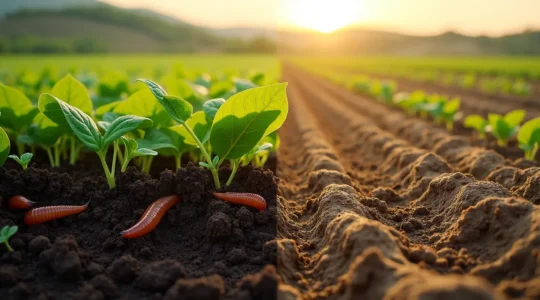
Quantity or Nutrient Density: Which Meets Future Nutritional Needs Better?
For decades, the equation for agricultural success was simple: higher yield equals higher profit. The entire system, from breeding to fertilization, was engineered to maximize tonnage. This approach fed the world, a monumental achievement that saw productivity skyrocket. The USDA…
Read more
Beyond the Binder: A Guide to Training Farm Staff on New Agronomic Protocols
Effective protocol training is the crucial bridge between investing in new agronomic technology and seeing actual results in the field. Success hinges on proving the “why” behind each procedure, transforming it from a mandate into a tool for shared success….
Read more
How to Grow Potatoes That Meet Fry-Processors’ Specifications?
The key to profitable contract farming is shifting from a grower’s mindset to a raw material manufacturer’s, where meeting the processor’s exact biochemical and physical specifications is the only metric that matters. Your crop’s value is not determined by its…
Read more
A Meticulous Guide to Achieving GlobalGAP Certification for Export Markets
Achieving GlobalGAP certification hinges not on what you do, but on what you can rigorously prove through auditable evidence. Digital, time-stamped records are now a non-negotiable prerequisite for passing audits and securing contracts with major retailers. System integrity, from worker…
Read more
Profit vs. Planet: How to Balance Ecology and Economy?
Balancing ecology and economy is not a compromise but a direct path to higher profitability and long-term business resilience in agriculture. Market demand for verifiably sustainable goods creates significant premium pricing opportunities. Innovative financing models and revenue stacking (e.g., carbon…
Read more