Agricultural Techniques
Modern agriculture has evolved far beyond simply planting seeds and hoping for favorable weather. Today’s farming landscape demands a sophisticated understanding of soil science, plant physiology, water management, and data-driven decision making. Whether you’re managing row crops, orchards, vineyards, or exploring controlled environment agriculture, mastering the right techniques can mean the difference between mediocre yields and exceptional productivity.
The transition from traditional farming to precision agriculture represents one of the most significant shifts in food production history. This comprehensive resource introduces the fundamental techniques that define modern agricultural practice—from analyzing your soil’s hidden properties to implementing technology that adjusts inputs foot by foot across your fields. Each technique builds upon core principles while offering specific applications for different crops, climates, and farm scales.
Understanding Modern Agricultural Techniques: From Traditional to Precision Farming
The foundation of advanced agriculture lies in recognizing that not all areas of a field—or even sections of a single row—perform identically. Traditional farming treated entire fields as uniform entities, applying the same seed population, fertilizer rate, and irrigation schedule everywhere. This approach inevitably meant overinvesting in low-potential zones while underserving high-potential areas.
Precision agriculture changes this paradigm by acknowledging and responding to variability. Think of it like tailoring a suit versus buying off-the-rack: one approach accounts for individual measurements and delivers superior fit, while the other accepts compromise. Modern techniques allow farmers to measure differences in soil type, organic matter, drainage, and historical productivity, then adjust management decisions accordingly.
For growers working with challenging crops—those sensitive to water stress, nutrient imbalances, or specific temperature ranges—precision becomes even more critical. High-value crops like specialty vegetables, berries, or wine grapes often operate within narrow optimal ranges. A pH variation of just half a point or a soil moisture difference of a few percentage points can dramatically impact quality and marketability.
The shift toward precision also extends to controlled environment agriculture, where hydroponic systems and vertical farming operations use substrate-based cultivation to achieve unprecedented control over the root zone environment. These systems represent the logical extension of precision thinking: if field variability limits potential, why not eliminate the field entirely and create perfectly controlled growing conditions?
Soil Analysis and Preparation: The Foundation of Successful Cultivation
Every successful growing season begins long before planting day—it starts with understanding what lies beneath the surface. Soil analysis reveals the chemical and physical properties that will either support or limit crop performance throughout the season.
Chemical Properties and Nutrient Availability
Soil testing goes far beyond the basic nitrogen-phosphorus-potassium (N-P-K) numbers. pH balance serves as the master variable controlling nutrient availability. Even when ample nutrients exist in your soil, they may be chemically locked up and unavailable to plant roots if pH strays outside the optimal range. For most crops, this range sits between 6.0 and 7.0, but variations of just 0.5 units can reduce the availability of critical micronutrients like iron, manganese, or zinc by half.
The methodology you choose for soil sampling directly impacts the reliability of your results. Deep soil sampling—taking cores to 24 or even 36 inches—reveals nutrient stratification and identifies problems that surface testing misses entirely. For example, subsurface acidity or salt accumulation may be limiting root development even when surface samples appear acceptable.
Physical Properties and Soil Structure
Soil texture—the relative proportions of sand, silt, and clay—determines water-holding capacity, drainage characteristics, and workability. This property cannot be changed, but it profoundly influences amendment choices. A sandy soil losing nitrogen to leaching requires different management than a heavy clay soil prone to waterlogging.
Soil structure, unlike texture, can be improved or destroyed through management decisions. Over-tilling represents one of the most common and damaging mistakes, particularly in fragile soils. Excessive tillage pulverizes soil aggregates, destroys beneficial fungal networks, and creates hardpans that restrict root growth. The short-term benefit of a perfectly smooth seedbed often creates long-term structural problems that reduce water infiltration and increase erosion risk.
Pre-Planting Strategies and Amendment Timing
Once you understand your soil’s properties, strategic amendments can address limitations before they impact the crop. Choosing the right amendment depends on both the identified problem and soil texture. Lime application to raise pH works slowly and requires incorporation months before planting. Gypsum improves soil structure in heavy clays without changing pH. Organic matter additions benefit almost all soils but require realistic expectations about rates and timing.
The timing of pre-plant nitrogen application presents a particular challenge. Apply too early, and losses to volatilization, leaching, or denitrification reduce efficiency. Apply too late, and early-season crop demand may exceed availability. The optimal window depends on soil temperature, moisture conditions, and the specific nitrogen source used.
Advanced Planting Methods for Maximum Stand Establishment
Perfect germination and uniform emergence set the trajectory for the entire growing season. Modern planters have evolved into precision instruments capable of placing individual seeds at exact depths with consistent spacing—but only when properly configured and operated.
Achieving Optimal Seed Placement
The goal of precision planting extends beyond simply distributing seeds at the labeled population. Each seed must be placed at the correct depth, in firm contact with moist soil, and with adequate spacing from its neighbors to minimize competition during early growth. This requires attention to three critical factors:
- Seed-to-soil contact: Seeds suspended in air pockets or buried in loose, fluffy soil struggle to absorb moisture and emerge uniformly. Closing wheels must firm the seed trench without creating sidewall compaction.
- Consistent depth control: Variable downforce systems adjust pressure on individual row units to maintain target depth even as soil conditions change across the field. Seeds planted too shallow risk drying out; too deep, and they exhaust energy reserves before reaching sunlight.
- Sidewall compaction management: Planting into wet soil creates glazed sidewalls that restrict root penetration. The temptation to plant during marginal conditions—driven by tight spring windows—often creates problems that persist all season.
Planting Speed and Population Decisions
High-speed planting technology allows producers to cover more acres per day, but speed means nothing if it compromises placement accuracy. Most planters maintain acceptable singulation and spacing up to certain speeds, beyond which seed bounce, doubles, and skips increase dramatically. The key is identifying your equipment’s threshold through careful monitoring and testing.
Modern hybrid varieties often respond differently to population than older genetics. Standard spacing recommendations developed decades ago may actually reduce potential yield in today’s hybrids, which often tolerate or even benefit from higher populations. However, this generalization masks important field-level variation: high populations in low-yield zones typically reduce profit by increasing seed costs without proportional yield gains.
Irrigation Systems: Precision Water and Nutrient Delivery
For permanent crops like orchards and vineyards, the irrigation system represents a multi-decade infrastructure investment that profoundly influences productivity, fruit quality, and input efficiency. Drip irrigation has become the standard for these applications, but successful implementation requires careful design and diligent maintenance.
System Design Considerations
Pressure compensation becomes vital when irrigating sloped terrain. Without it, emitters at lower elevations discharge more water than those uphill, creating overwatered zones at the bottom and water-stressed plants at the top. Pressure-compensating emitters maintain uniform flow rates across elevation changes, though they cost more initially.
The choice between subsurface and surface drip installation involves tradeoffs. Buried lines protect the system from UV degradation, mechanical damage, and theft while reducing evaporation losses. However, they’re invisible, making leak detection difficult and creating opportunities for root intrusion into emitters. Surface systems allow easy inspection and adjustment but require careful management during cultivation and harvest operations.
Maintenance Protocols for System Longevity
Even the best-designed drip system fails without proper maintenance. Biofilm—the slimy accumulation of bacteria, algae, and minerals inside drip lines—represents the primary threat to system longevity. Regular flushing protocols prevent buildup by periodically opening line ends and allowing high-velocity flow to scour the interior. The frequency depends on water quality, with harder water or water containing organic matter requiring more aggressive maintenance schedules.
Fertigation—injecting fertilizers through irrigation lines—offers tremendous efficiency but introduces additional clogging risks. Salt precipitation and chemical reactions can occur within the lines themselves. Using appropriate filters, maintaining proper injection rates, and flushing with clean water after fertilizer applications protect your investment.
Optimizing Nutrient Management and Input Efficiency
Fertilizers typically represent one of the largest variable costs in crop production. Improving use efficiency—the proportion of applied nutrients actually taken up by the crop—directly impacts both profitability and environmental stewardship.
Understanding Nutrient Loss Pathways
Nitrogen, the most commonly applied and expensive nutrient, faces multiple loss pathways that reduce efficiency. Volatilization—the conversion of surface-applied nitrogen to ammonia gas—can waste 20-40% of broadcast urea applications, particularly in warm, moist conditions with high soil pH. The nitrogen simply evaporates into the atmosphere before plants can use it.
Using nitrification inhibitors or urease inhibitors extends nutrient availability by slowing the conversion processes that make nitrogen vulnerable to loss. These products add cost, but in situations with high loss risk, they often deliver positive economic returns through improved efficiency.
Application Strategies for Maximum Uptake
The debate between split applications and single-dose fertilization hinges on balancing efficiency against operational convenience. Split applications—dividing total nutrients into two or more applications timed to crop demand—typically improve efficiency by reducing the pool of available nutrients vulnerable to loss at any one time. However, they require additional field passes, labor, and equipment time.
Banding technology for phosphorus placement exemplifies precision nutrient management. Rather than broadcasting phosphorus across the entire field surface, banding concentrates it in a narrow zone near the seed. This strategy addresses phosphorus’s limited mobility in soil—it doesn’t move far from where you place it. Banding puts phosphorus where developing roots can access it while using 30-50% less product than broadcast applications.
The risk of salt injury from high fertilizer rates reminds us that more isn’t always better. Fertilizer salts in high concentrations draw water out of seeds and seedlings through osmosis, the same principle that makes salt water undrinkable. This is particularly problematic with in-furrow applications during dry conditions. Understanding the salt index of different fertilizer sources helps avoid this pitfall.
Technology-Driven Farming: Variable Rate Applications and Real-Time Monitoring
Variable Rate Technology (VRT) represents precision agriculture’s most direct application: adjusting input rates on-the-go to match field variability. Rather than applying the same seed population, fertilizer rate, or chemical dose everywhere, VRT systems respond to prescription maps that account for soil differences, historical yield patterns, or real-time sensor data.
Creating Effective Prescription Maps
The foundation of successful VRT lies in quality prescription maps that accurately represent field variability. Yield data collected over multiple seasons reveals consistent performance patterns. High-yield zones typically benefit from higher seeding rates and fertilizer applications, while low-yield zones—often constrained by shallow soils, poor drainage, or other non-correctable factors—generate better economic returns with reduced input investments.
The comparison between fixed-rate and variable-rate applications isn’t just about total input usage. VRT optimizes the distribution of inputs, investing more where return potential is highest and reducing waste in limited-potential areas. This often means total input usage changes modestly, but economic return improves substantially.
Real-Time Soil Monitoring Technologies
Soil sensors provide continuous data streams that inform immediate decisions rather than waiting for periodic sampling. Electrical conductivity (EC) maps define management zones by measuring how easily electrical current flows through soil. High EC typically correlates with finer soil textures, higher moisture-holding capacity, and greater organic matter—all factors influencing productivity.
Dielectric permittivity sensors measure soil moisture by detecting the soil’s ability to store electrical charge, which changes dramatically with water content. Continuous logging creates detailed moisture profiles over time, revealing patterns that spot checks miss entirely. This information optimizes irrigation scheduling and helps determine trafficability—whether soil conditions support field operations without causing compaction damage.
The danger of poor calibration cannot be overstated: inaccurate sensor readings lead to faulty decisions that ripple through the entire production system. Installation quality matters equally—gaps in sensor coverage or sensors placed in unrepresentative locations generate misleading data that erodes confidence in the technology.
Streamlining Farm Operations for Maximum Productivity
Even the best agronomic techniques deliver suboptimal results when embedded in inefficient operational systems. Applying lean management principles—concepts borrowed from manufacturing—helps identify and eliminate waste in farm logistics.
Harvest operations exemplify the importance of coordination. Combine productivity is often limited not by the machine’s capacity but by waiting time for grain carts. When the combine sits idle with a full hopper, waiting for a cart to arrive, the entire harvest system underperforms. Mapping field entry and exit routes, coordinating cart movements, and deciding between centralized filling stations and nurse trucks all impact overall efficiency.
The choice between multi-hybrid planters—allowing variety changes on-the-go—and traditional planters illustrates operational optimization. While the agronomic benefit of matching specific hybrids to soil zones is clear, the operational complexity increases. Timing the switch between varieties requires coordination, adds potential for errors, and slows planting speed. The net benefit depends on how significant the hybrid-soil interaction is relative to the operational cost.
Preventive maintenance windows represent another often-overlooked operational element. Equipment breakdowns during critical windows—planting, spraying, or harvest—create cascading delays and missed opportunities. Optimizing maintenance schedules to address potential failures before they occur, during periods when equipment sits idle anyway, protects the tight operational windows that modern farming demands.
Agricultural techniques continue to evolve, driven by advancing technology, deeper understanding of biological systems, and the constant pressure to produce more with less. Whether you’re refining a single practice or transforming your entire operation, remember that the most sophisticated technique means nothing without proper implementation. Start with the fundamentals—healthy soil, quality seed placement, and efficient resource use—then layer in advanced technologies as your understanding and infrastructure develop.
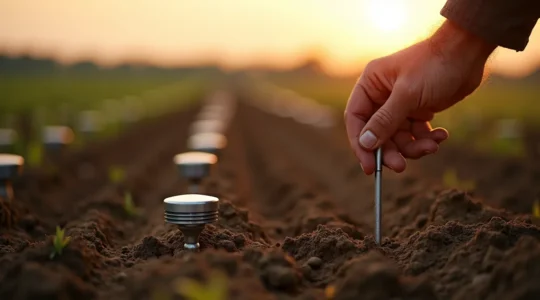
Wireless Soil Sensors vs. Handheld Probes: Which Monitors Conditions Best?
The best soil monitoring tool isn’t the most advanced; it’s the one that provides the exact data resolution your specific agronomic question demands. Wireless sensors excel at high-frequency temporal data (answering when to act) for tasks like irrigation scheduling. Handheld…
Read more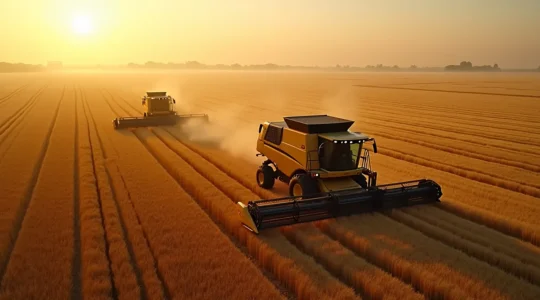
How to Apply Lean Principles to Streamline Harvest Logistics?
Frustrated by combines waiting and trucks queued up? The problem isn’t machine speed, but system flow. This guide reframes harvest logistics as a factory line, showing you how to apply lean engineering principles to identify and eliminate bottlenecks. You’ll learn…
Read more
How to Adjust Seeding Rates Based on Soil Potential Zones?
Variable Rate Seeding success isn’t about population maps; it’s a discipline focused on eliminating the hidden profit drains in your data, equipment, and agronomic strategy. Inaccurate or “dirty” yield data is the primary cause of flawed seeding prescriptions that amplify,…
Read more
How to Reduce Synthetic Fertilizer Use by 30% Without Yield Loss?
The key to cutting fertilizer costs isn’t using less—it’s stopping the waste of what you already apply. Up to 40% of surface-applied urea is lost to the air, representing a direct financial drain. Your soil’s health (pH, compaction) has a…
Read more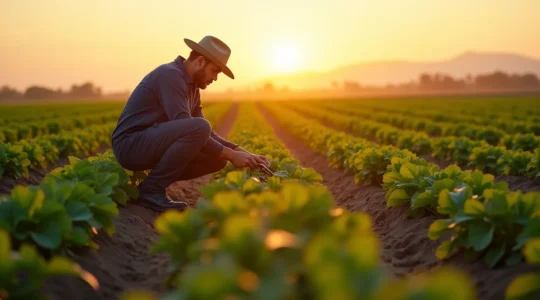
How to Maintain Micro-Irrigation Lines for 10+ Years?
Achieving a decade or more of peak performance from a drip system depends less on routine tasks and more on mastering the pre-emptive timing and chemistry of interventions. System failure is rarely sudden; it’s a cascade of preventable chemical, biological,…
Read more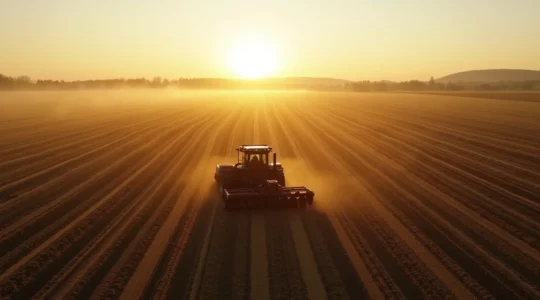
The Perfectionist’s Guide to Planter Calibration: Achieving 99% Singulation Accuracy
Contrary to the common “set-it-and-forget-it” approach, achieving near-perfect singulation is a dynamic, in-field battle against micro-failures that standard checklists miss. Static spring downforce is a primary culprit for inconsistent depth, costing significant yield in variable soils. Meter calibration must account…
Read more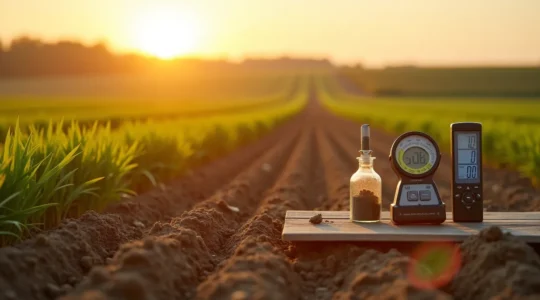
How to Truly Interpret Soil Tests for Precision Fertilization and Stop Wasting Money
Contrary to common belief, high NPK numbers on your soil test don’t guarantee a successful crop. This guide reveals that the real key to precision fertilization lies in understanding the physical and biological roadblocks in your soil, like compaction and…
Read more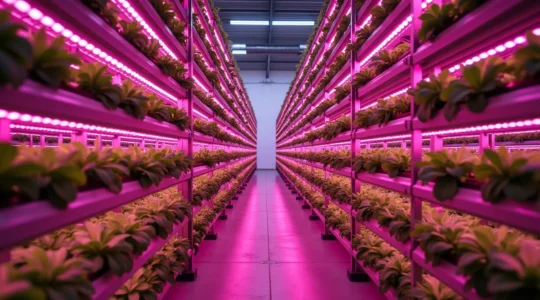
How to Master High-Density Planting for Maximum Output?
High-density success isn’t about plant numbers; it’s about mastering the limiting factors of your specific growing system. True optimization demands re-engineering your approach to light as a biological trigger, not just an energy source. Precise nutrient balance, like the critical…
Read more